Sicilian Symbols: Meaning and History of Sicily’s Traditions
Sicily has a rich heritage of symbols, images and traditions that tell the story of its history and cultural identity. From the Trinacria to the Moorish heads, from the Sicilian pine cone to painted carts, many of these symbols have become recognisable far beyond the island.
But what are the symbols of Sicily, and what do they mean? Some have historical and mythological origins, while others are associated with craftsmanship, the landscape, folk music and food. Still others have become symbols of good luck, cultural identity or a connection with one’s roots.
In this guide, we explore the main Sicilian symbols and their meanings, distinguishing historical evidence from legends and popular interpretations that have developed over time.
The Trinacria: Sicily’s Symbol and the Meaning of the Three Legs
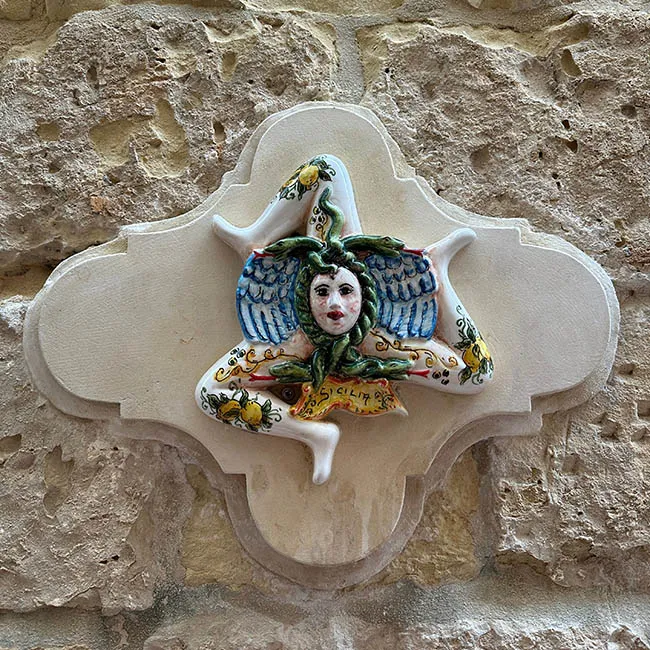
The Trinacria, symbol of Sicily
The Trinacria is the best-known symbol of Sicily and appears at the centre of the regional flag. Its distinctive design features three bent legs arranged around a central head, often accompanied by snakes and ears of wheat.
The name Trinacria is connected with the island’s triangular shape. In ancient times, the Greeks associated Sicily with its three main headlands: Capo Peloro, near Messina; Capo Passero, in the Syracuse area; and Capo Lilibeo, near Marsala.
What Do the Three Legs of the Trinacria Represent?
The three legs of the Trinacria traditionally refer to Sicily’s three headlands and the island’s distinctive geographical shape. Their circular arrangement gives the symbol a sense of movement and makes it instantly recognisable.
At the centre is the Gorgoneion, the head of a Gorgon from Greek mythology, commonly identified as Medusa. In traditional representations, the face is surrounded by snakes and may be accompanied by ears of wheat, associated with Sicily’s agricultural fertility.
The Trinacria therefore brings together references to the island’s geography, mythology and history. Its present-day form is the result of a long evolution in its imagery: ancient and modern representations do not all feature the same details.
Trinacria and Triskelion: What Is the Difference?
The terms Trinacria and triskelion are closely related and are often used interchangeably when discussing Sicily. More generally, a triskelion is a motif formed by three elements arranged around a central point.
The Sicilian Trinacria is the version specifically associated with the island, in which the three legs are combined with a central head. The Sicilian flag incorporates this motif with the Gorgoneion, creating one of the region’s most recognisable emblems.
Sicilian Moorish Heads: History, Legend and Meaning
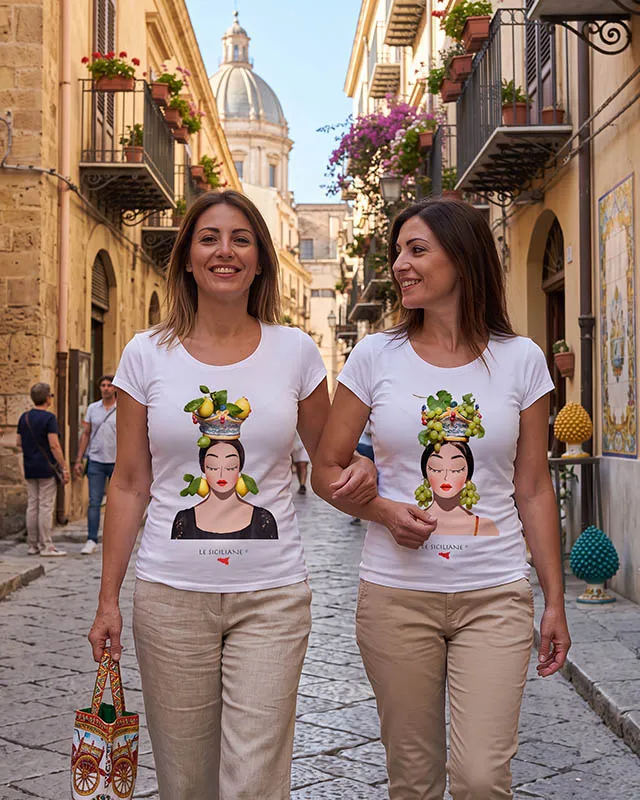
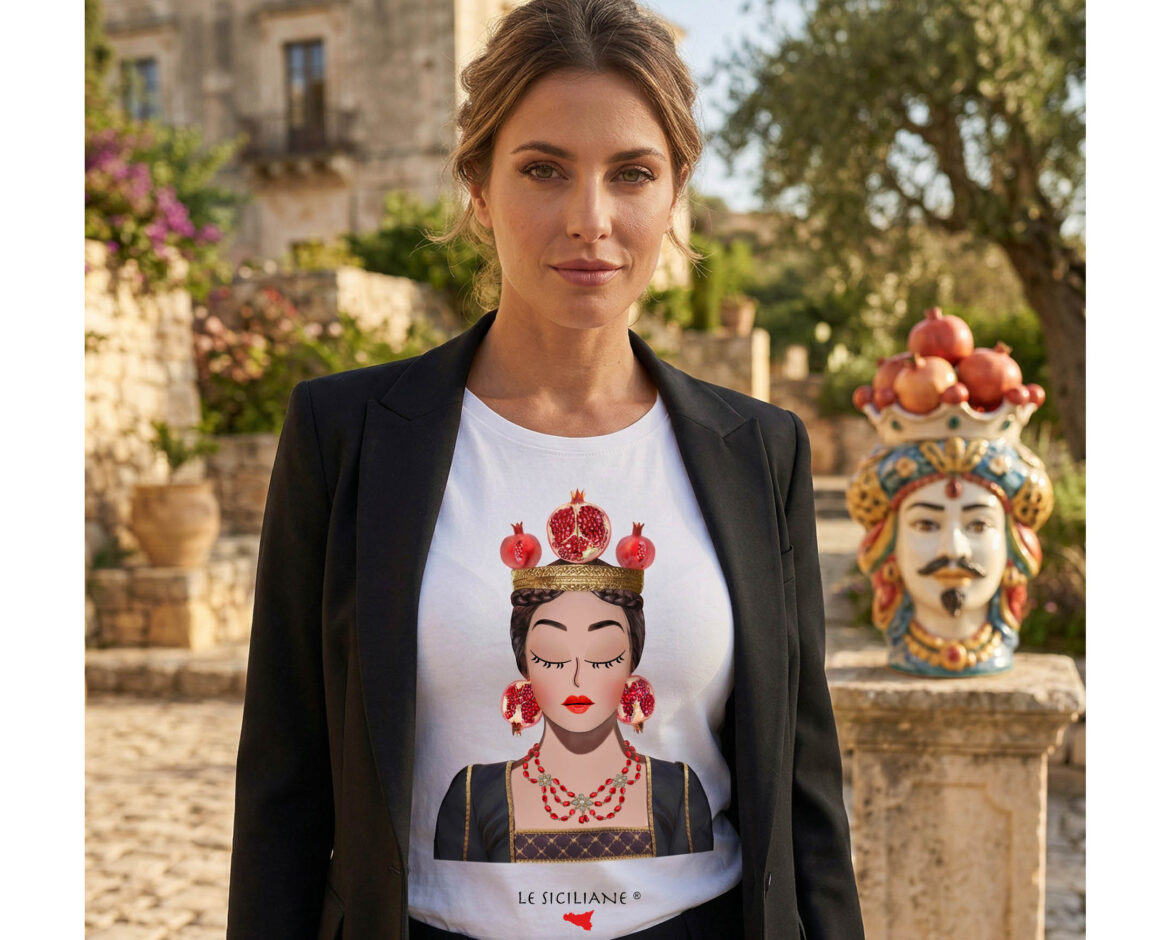
Moorish heads, known in Italian as *teste di moro*, are among the most distinctive images in Sicilian craftsmanship. These ceramic sculptures depict male and female heads, often adorned with crowns, jewellery, turbans and richly coloured decorations.
Moorish heads are particularly associated with the ceramic tradition of Caltagirone, although they are made in various parts of the island. They can be used as decorative planters, home accessories and artistic creations.
The Legend of the Moorish Heads
The best-known story is a popular legend set in Palermo in the past. It tells of a young Sicilian woman who fell in love with a Moorish man. When she discovered that he would leave Sicily and return to his homeland, where another family was waiting for him, the woman, overcome by jealousy, killed him and cut off his head.
According to the tale, she turned the head into a planter and planted basil in it. The plant grew luxuriantly and attracted the attention of her neighbours, who had similar planters made to imitate it.
Several versions of this legend exist, with details that vary from one account to another. It is important to understand it as a popular tale, rather than a historical event documented in every detail.
What Do Sicilian Moorish Heads Mean?
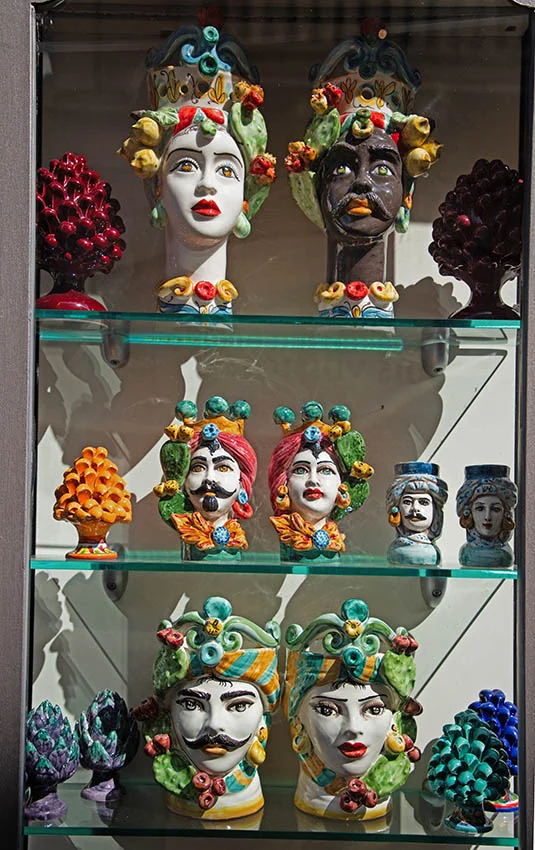
Sicilian Moorish heads
The meaning of Sicilian Moorish heads is connected with the legend, the history of Sicilian craftsmanship and contemporary interpretations. Today, these ceramics can evoke:
- Love and passion, through the romantic and tragic story told in the legend.
- Sicilian identity, because they have become one of the most recognisable images of the island’s culture.
- Art and beauty, thanks to their elaborate decorations and attention to detail.
- Traditional craftsmanship, through ceramic techniques and the interpretations developed by artisans.
There is no universal meaning attached to every Moorish head. The significance attributed to these figures can vary according to tradition, craftsmanship and personal sensibility.
Moorish Heads Between Traditional Ceramics and Contemporary Design
Alongside classic versions, today you can find Moorish heads reinterpreted with contemporary colours, floral decorations, stylised lines and new colour combinations. The tradition continues to inspire artists and designers without being limited to reproducing models from the past.
Moorish heads have become much more than souvenirs: they bring together legend, ceramics and artistic expression in a form that continues to evolve.
The Sicilian Pine Cone: Meaning, Tradition and Good Luck
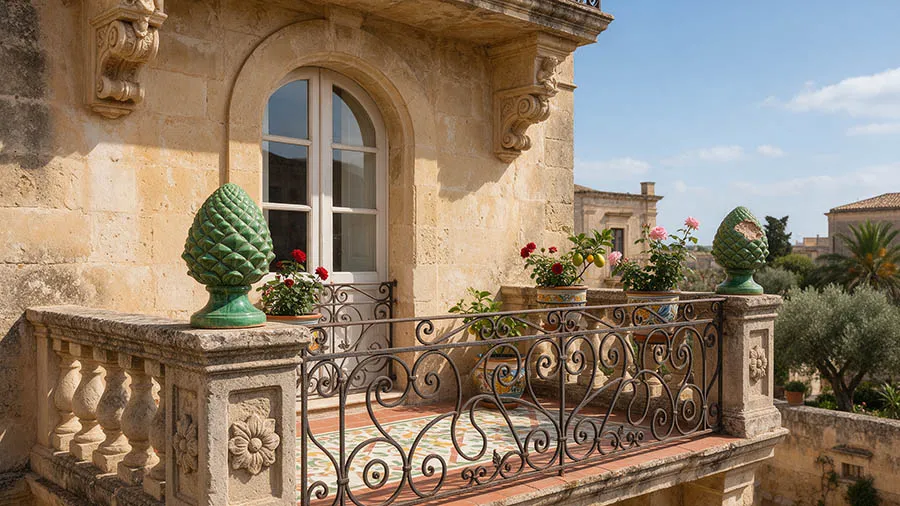
The Sicilian pine cone, one of the symbols of Sicily
The Sicilian pine cone is a popular decorative object in the island’s craft tradition. Often made of ceramic, it reproduces the shape of a pine cone through a series of scales that can be modelled and decorated in different ways.
Decorative pine cones also appear in other Italian and Mediterranean artistic traditions. In Sicily, they have found a distinctive expression in ceramic production, where they are made in many sizes, colours and finishes.
What Is the Meaning of the Sicilian Pine Cone?
In traditional and popular interpretations, the pine cone is often associated with prosperity, abundance, fertility and good luck. These meanings are linked to the many seeds contained in the cone and its symbolic ability to evoke growth and renewal.
For this reason, a decorative pine cone may be chosen as a gift for a new home, a wedding or a fresh start. In these contexts, it mainly represents a wish for well-being and good fortune.
These symbolic associations are not identical in every tradition and should not be understood as a universal code. Their meaning may depend on local customs and the personal value attached to the object.
Why Is the Pine Cone So Common in Sicilian Ceramics?
The pine cone’s shape lends itself to artistic craftsmanship: its scales allow for richly detailed surfaces, while ceramic glazes make it possible to create a variety of colour effects.
Sicilian artisans produce hand-painted pine cones, decorated with traditional motifs or reinterpreted in a modern style. Caltagirone is one of the island’s best-known centres for artistic ceramics, but the pine cone is not an exclusively Sicilian motif.
The Sicilian Cart: Colours, Decorations and Folk Tradition
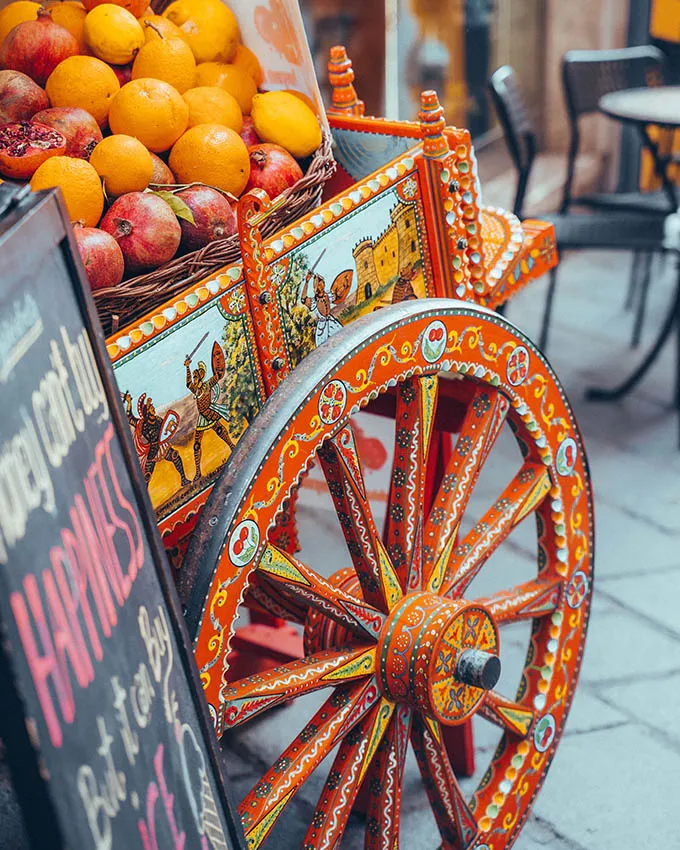
A traditional Sicilian cart
The Sicilian cart, or *carretto siciliano*, is one of the most recognisable symbols of the island’s folk culture. In the past, it was used to transport goods and agricultural produce; over time, it also became a form of artistic expression.
Wheels, painted panels, carvings and vivid decorations are characteristic features of these traditional vehicles. The subjects often include religious scenes, historical figures, floral motifs and chivalric adventures.
What Stories Do the Decorations on Sicilian Carts Tell?
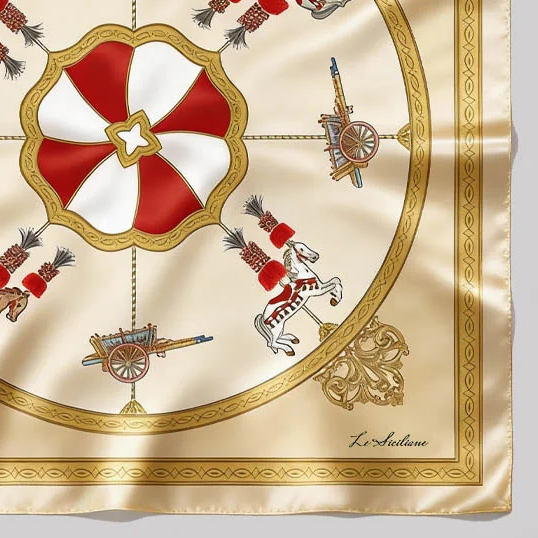
The decorations served more than an aesthetic purpose: they helped identify the work of individual artisans and tell stories through images.
Recurring subjects included episodes from chivalric literature, such as the adventures of Orlando and the Paladins, alongside scenes connected with history and religious devotion. The painted panels thus turned a means of transport into a kind of visual storybook.
Today, Sicilian carts can be found in collections, museums, traditional festivals and artisan workshops. Their decorations also continue to inspire illustrations, accessories, clothing and design objects.
The Opera dei Pupi: Paladins and Traditional Sicilian Puppet Theatre
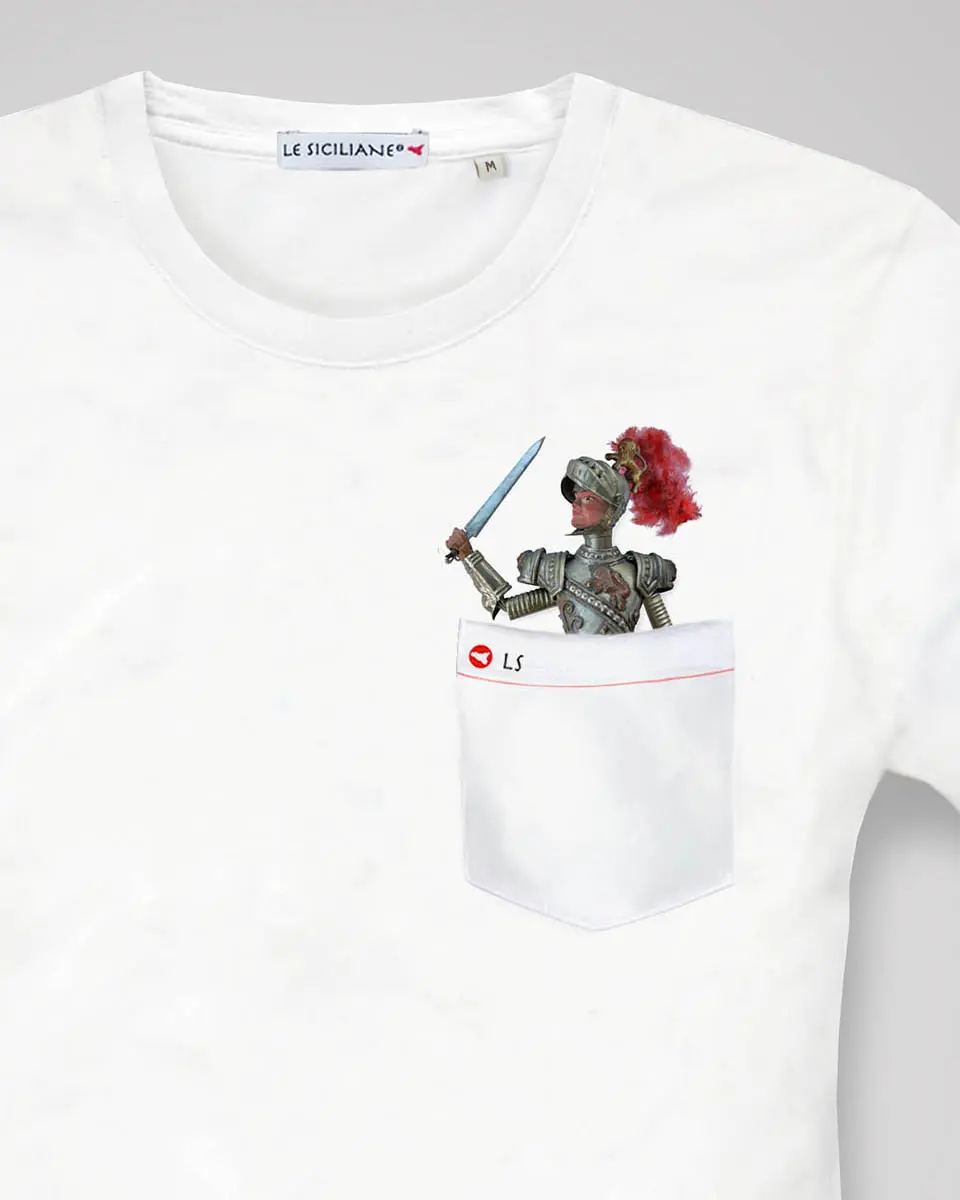
The Opera dei Pupi is a traditional form of puppet theatre that became established in Sicily in the early nineteenth century. Performances mainly recount chivalric adventures, featuring duels, battles, heroic deeds and characters inspired by medieval and Renaissance literature.
The puppets are often characterised by armour, shields and decorated costumes. Making them requires craftsmanship involving carving, painting and the construction of mechanisms that allow them to move.
The traditions of Palermo and Catania have distinct characteristics, including differences in puppet size, manipulation techniques and stage design. The Opera dei Pupi is more than a theatrical performance: it preserves craftsmanship, folk narratives and acting techniques passed down over time.
In 2008, the Sicilian Opera dei Pupi was inscribed on UNESCO’s Representative List of the Intangible Cultural Heritage of Humanity. It remains a living tradition, kept alive by puppeteers, theatre companies and workshops that continue to make puppets and stage performances.
Sicilian Majolica and Caltagirone Ceramics: Symbols of Colour
Sicilian majolica is one of the most recognisable expressions of the island’s craftsmanship. Decorative plates, tiles, vases, panels and home accessories stand out for their vivid colours and motifs inspired by nature, the landscape and local culture.
Recurring designs include lemons, oranges, prickly pears, flowers, geometric patterns and references to the Trinacria. Some pieces also feature Sicilian carts and Moorish heads.
Caltagirone, in the province of Catania, is one of the best-known centres for Sicilian artistic ceramics. The town is also famous for the Scalinata di Santa Maria del Monte, a staircase decorated with ceramic tiles.
Sicilian ceramics represent a heritage of techniques and artisanal knowledge, as well as a collection of images that continues to be reinterpreted. Not every decorative motif has a specific symbolic meaning: many are chosen for their beauty and their visual connection with the island.
Prickly Pears, Lemons, Oranges and Zagara: Symbols of Sicilian Nature
The Mediterranean landscape has helped shape many of the images now associated with Sicily. Prickly pears, lemons, oranges and zagara blossoms evoke the vegetation, citrus groves, colours and scents that are part of everyday life in many parts of the island.
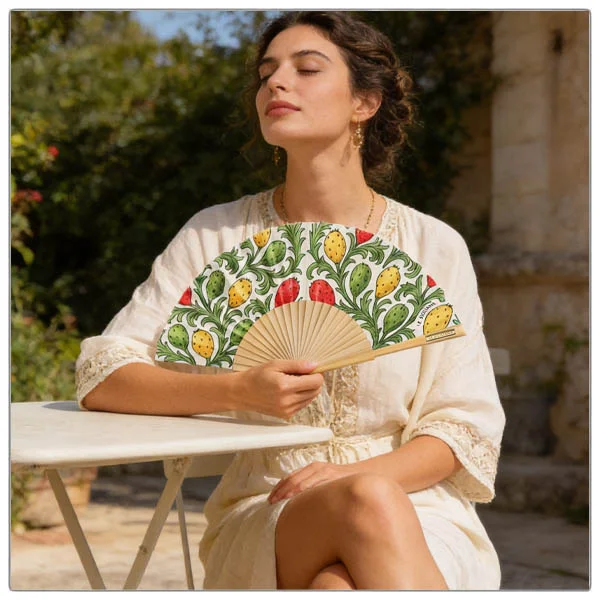
The Prickly Pear: A Plant of the Sicilian Landscape
The prickly pear is a familiar sight in many parts of Sicily, especially in dry, sun-drenched landscapes. Its green pads and brightly coloured fruit make it instantly recognisable.
Its ability to grow in difficult conditions can evoke resilience, adaptability and vitality. These are symbolic interpretations rather than universally established historical meanings. The prickly pear also features in local cuisine, craftsmanship and designs inspired by the island.
The Sicilian Lemon: Colour, Fragrance and Tradition

The Sicilian lemon is one of the fruits most closely associated with the image of Sicily. Its vivid yellow colour, the fragrance of its peel and its presence in citrus groves have made it a recurring subject in ceramics, illustrations and design.
The lemon does not have a single, universally established traditional symbolic meaning. Today, it mainly evokes the Mediterranean landscape, sunlight, citrus fruits and the colours of Sicily, as well as the fruit’s importance in local cuisine.
The Sicilian Orange: The Fruit of the Citrus Groves
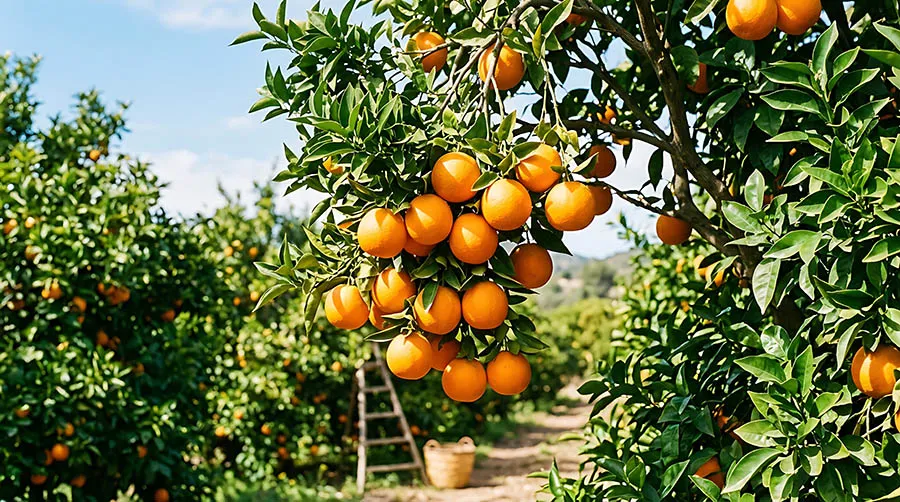
Oranges, lemons and mandarins: citrus fruits typical of Sicily
Sicilian oranges are closely linked to the island’s agricultural traditions, particularly in some eastern areas and around the Catania Plain. The fruit evokes citrus groves, harvesting and an important part of local production.
Like the lemon, the orange has become a popular decorative motif. Together with other citrus fruits, it helps represent the colours, nature and landscape of Sicily.
Zagara: The Fragrance of Orange Blossoms
Zagara is the name used for citrus blossoms, particularly those of orange and lemon trees. These small white flowers are prized for their delicate fragrance and their association with the flowering of citrus groves.
For many people who grew up in Sicily, the scent of zagara brings back memories of childhood, gardens, the countryside and everyday life. These associations are personal and cultural, and may vary from one person to another.
Zagara thus tells the story of Sicily through a fragrance, a season and a landscape, rather than through an official emblem.
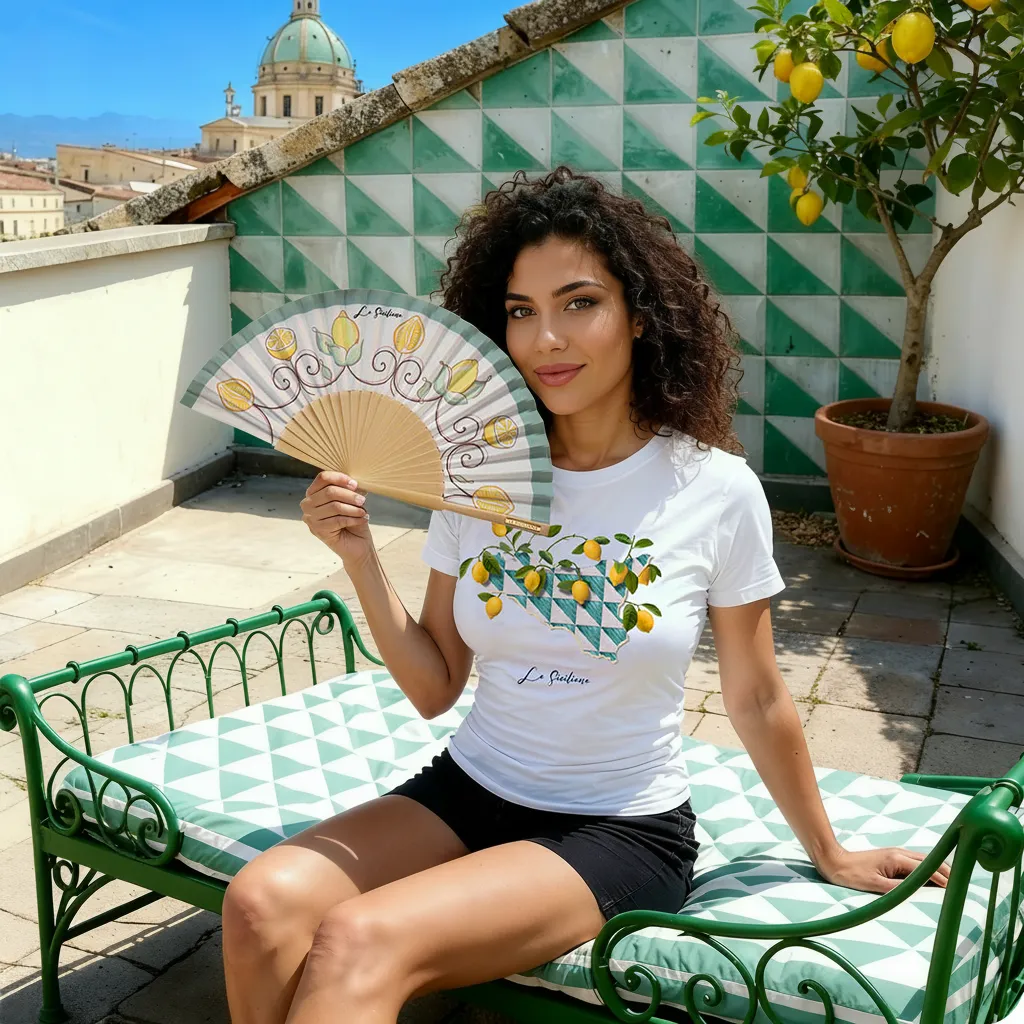
Cannoli, Cassata and Granita: Symbols of Sicilian Food Culture
Sicilian cuisine also contributes to the island’s cultural identity. Among its best-known specialities are the Sicilian cannolo, with its crisp shell and traditional ricotta filling, and Sicilian cassata, famous for its decorations and ingredients such as ricotta, marzipan and candied fruit, with variations reflecting different local traditions.
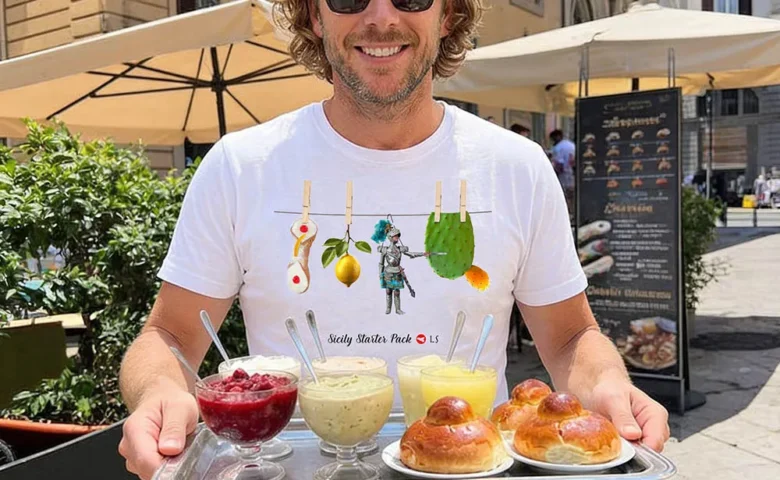
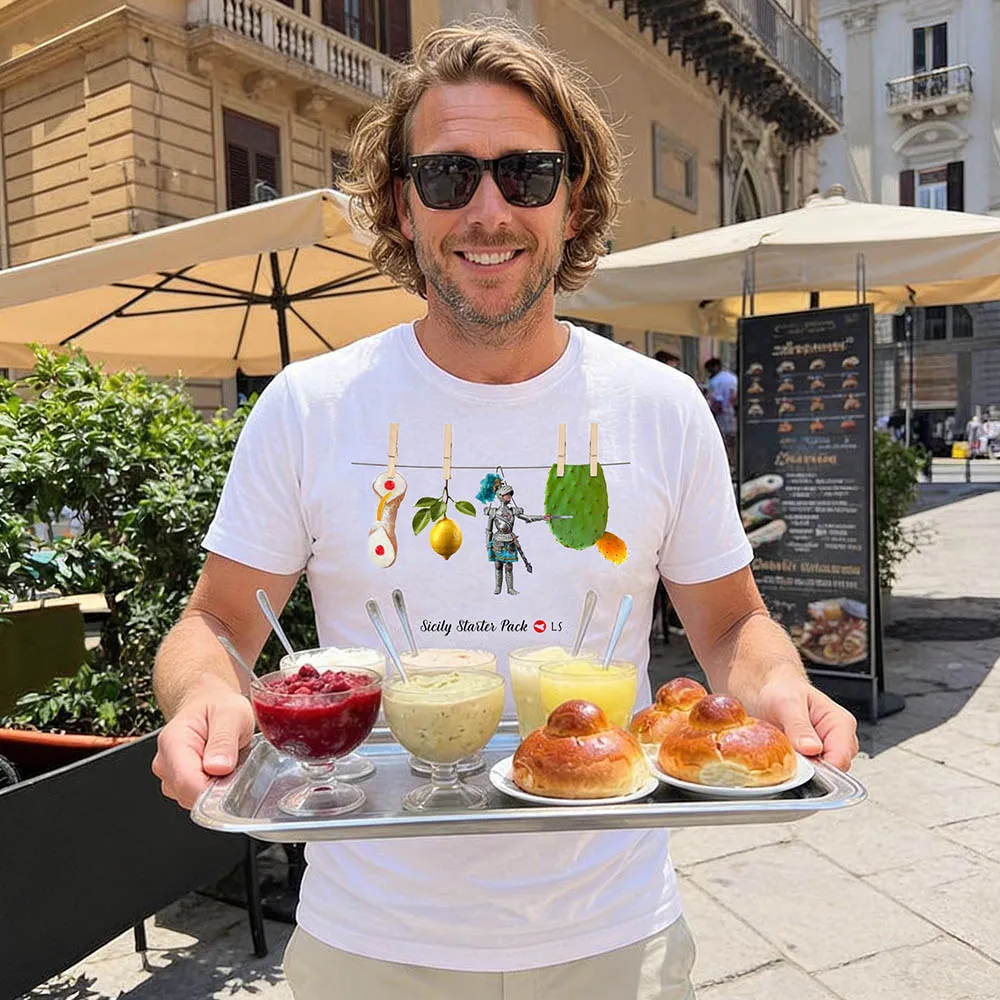
Sicilian granita is another characteristic speciality, particularly during the warmer months. Available in different flavours and often served with a brioche bun, it is part of the food culture of many Sicilian towns and cities.
Cannoli, cassata and granita are not official symbols, but they are expressions of Sicilian food culture, known and appreciated far beyond the region.
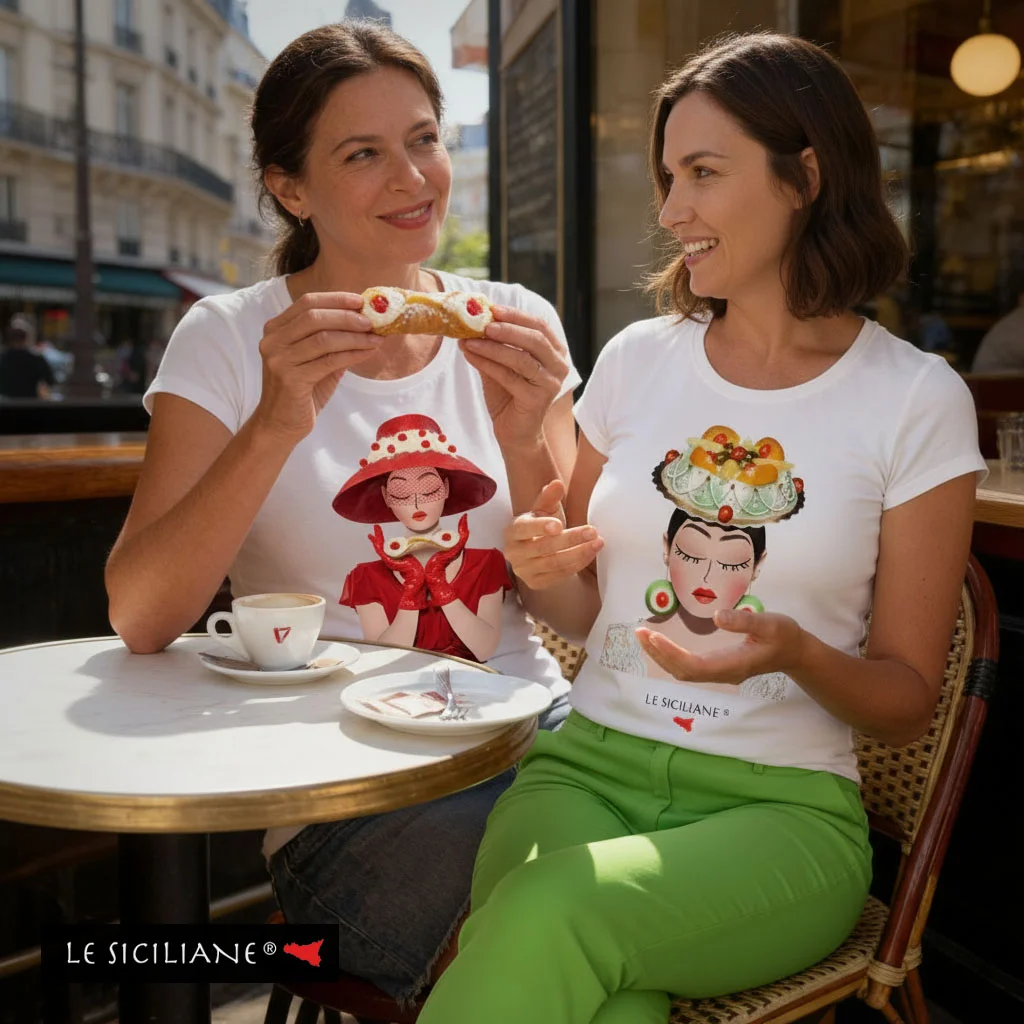
The Sicilian Coppola: A Traditional Cap Reimagined
The Sicilian coppola is a traditional cap associated with the island’s clothing heritage. It generally has a short brim and a soft shape, with different styles depending on the fabric, cut and craftsmanship.
Similar caps are found in other parts of Italy and Europe. In Sicily, however, the coppola has long been associated with men’s everyday clothing and rural traditions.
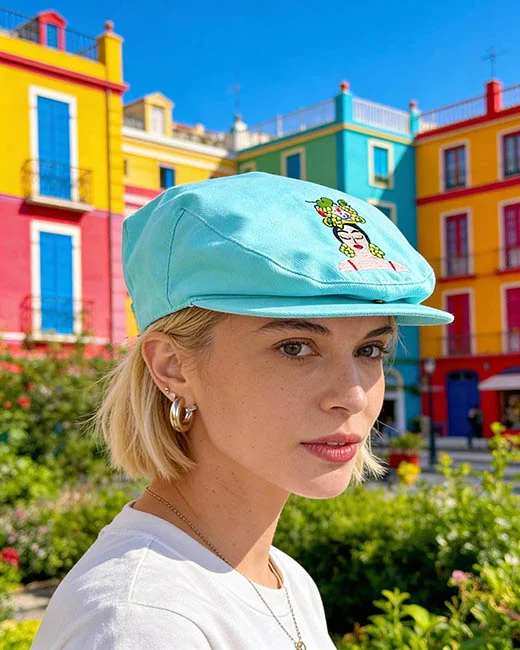
From Tradition to Contemporary Fashion
Over time, the coppola has evolved from a functional cap into a style accessory. Today, it is available in different materials and can be worn with both traditional outfits and contemporary looks.
Cinema has helped popularise its image, sometimes associating it with stereotypes about organised crime. This portrayal should not be confused with the history of the cap itself, which belongs to a much broader clothing tradition.
The Marranzano or Jew’s Harp: The Sound of Sicilian Folk Tradition
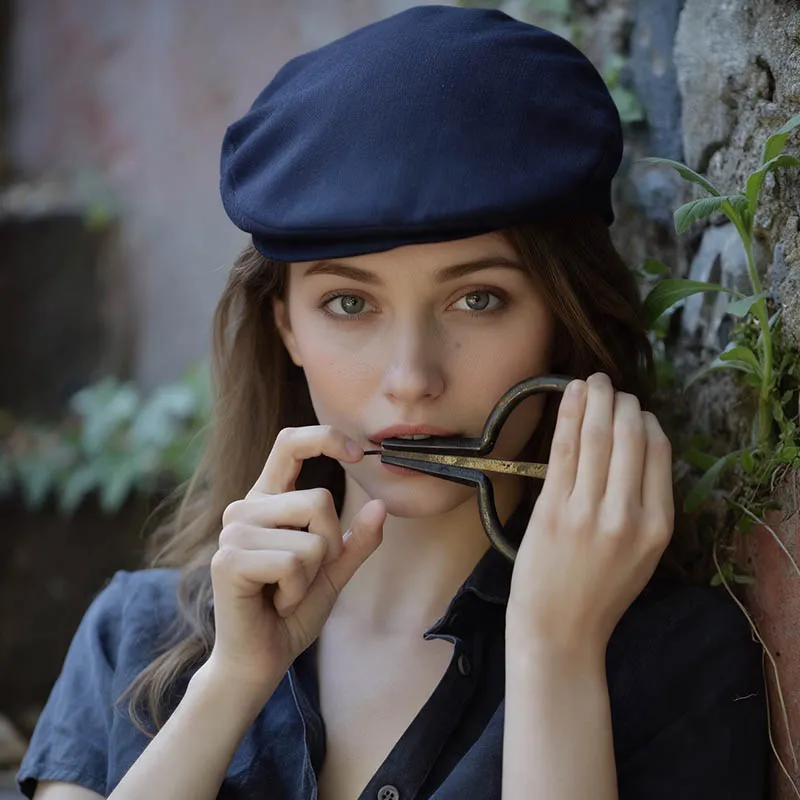
The marranzano, also known as the Jew’s harp, a musical instrument associated with Sicily
The marranzano, also known as the Jew’s harp, is a small musical instrument that produces its characteristic sound through a vibrating tongue. The player’s mouth acts as a resonating chamber, changing the tone through the shape of the oral cavity.
The instrument is associated with Sicilian folk music and sounds that evoke festivals, traditional performances and stories from local culture. Similar instruments are found in many cultures, so the marranzano should not be considered exclusively Sicilian in origin.
In Sicily, however, it has become a recognisable part of the local musical tradition, thanks in part to the artisans who continue to make it and the musicians who keep the practice alive. Its sound has also entered the cinematic imagination associated with the island.
Sicilian Symbols in Tattoos: Trinacria, Moorish Heads and the Pine Cone
Sicilian symbols in tattoos are often chosen to express a connection with one’s origins, a personal memory or affection for the island. The meaning of a tattoo depends on the story of the person wearing it and does not necessarily correspond to a shared historical interpretation.
- Trinacria: evokes Sicily, one’s roots and a sense of belonging to the island.
- Moorish heads: refer to the ceramic tradition and the popular legend.
- Sicilian pine cone: is sometimes chosen as a symbol of prosperity and good luck.
- Prickly pear: can evoke the Sicilian landscape and, as a personal interpretation, the ability to adapt.
- Lemon: recalls citrus groves, Mediterranean colours and characteristic images of the island.
- Sicilian cart: represents traditional decorations and folk stories.
Some people prefer realistic designs, while others choose minimalist versions of the Trinacria or motifs inspired by Sicilian majolica. Before attributing a historical meaning to a design, it is useful to distinguish documented traditions from contemporary interpretations.
What Are the Sicilian Symbols of Good Luck?
Some objects associated with Sicily are chosen as good-luck charms or given as gifts to wish someone well. In many cases, their meaning comes from a combination of decorative traditions, popular interpretations and personal sensibilities.
- The Sicilian pine cone is often associated with prosperity, abundance and good fortune.
- The Trinacria may represent protection or a connection with one’s homeland in contemporary interpretations.
- Decorative ceramics can be given to celebrate a new home or a fresh start.
- Objects inspired by Sicilian symbols can preserve the memory of a journey, a person or a place that holds special meaning.
Not all these objects originally developed as amulets, and their meanings are not identical in every tradition. Their value may be primarily emotional: a way to express a wish for good fortune or maintain a connection with Sicily.
Sicilian Symbols Today: Tradition, Art and Design
Sicilian symbols continue to live on through contemporary art. The Trinacria, Moorish heads, pine cones, painted carts, majolica and elements of the landscape inspire artisans, illustrators and designers.
Some retain traditional forms and techniques; others are reinterpreted through new colours, clean lines and contemporary compositions. The connection with Sicilian culture can therefore be expressed in different ways, without being limited to reproductions of objects from the past.
No single symbol can tell the whole story of Sicily. The Trinacria, ceramics, fruit, folk tales, music and everyday traditions together form a rich and multifaceted heritage.
Understanding the meaning of Sicilian symbols means discovering not only recognisable images, but also stories, artisanal knowledge and different ways of expressing a connection with the island.
Frequently Asked Questions About Sicilian Symbols
What Is the Main Symbol of Sicily?
The most representative symbol is the Trinacria, featuring three legs arranged around a central head. It appears at the centre of the Sicilian flag.
What Does the Trinacria Mean?
The Trinacria refers to the shape of Sicily and its three main headlands. The central head is generally identified as a Gorgon or Medusa; traditional representations may also include snakes and ears of wheat.
What Is the Meaning of Sicilian Moorish Heads?
Moorish heads are decorative ceramics associated with Sicilian craftsmanship and a famous popular legend set in Palermo. Today, they are also emblematic images of the island’s artistic tradition.
What Does the Sicilian Pine Cone Represent?
In popular and decorative interpretations, the pine cone is often associated with prosperity, abundance, fertility and good fortune. It is widespread in Sicilian ceramics, although its meaning can vary depending on the context.
What Are the Best-Known Symbols of Sicily?
The best-known symbols include the Trinacria, Moorish heads, the pine cone, the Sicilian cart, the Opera dei Pupi, majolica, prickly pears, lemons, oranges and zagara blossoms. Cannoli, cassata and granita are also important symbols of Sicilian food culture.
Which Sicilian Symbols Can You Choose for a Tattoo?
The Trinacria is a common choice for expressing a connection with Sicily. Designs inspired by Moorish heads, the pine cone, prickly pears, lemons and Sicilian carts are also popular. Their personal meaning may differ from the historical or traditional meaning of the subject.