What to eat in Palermo: markets, street smells, and flavors
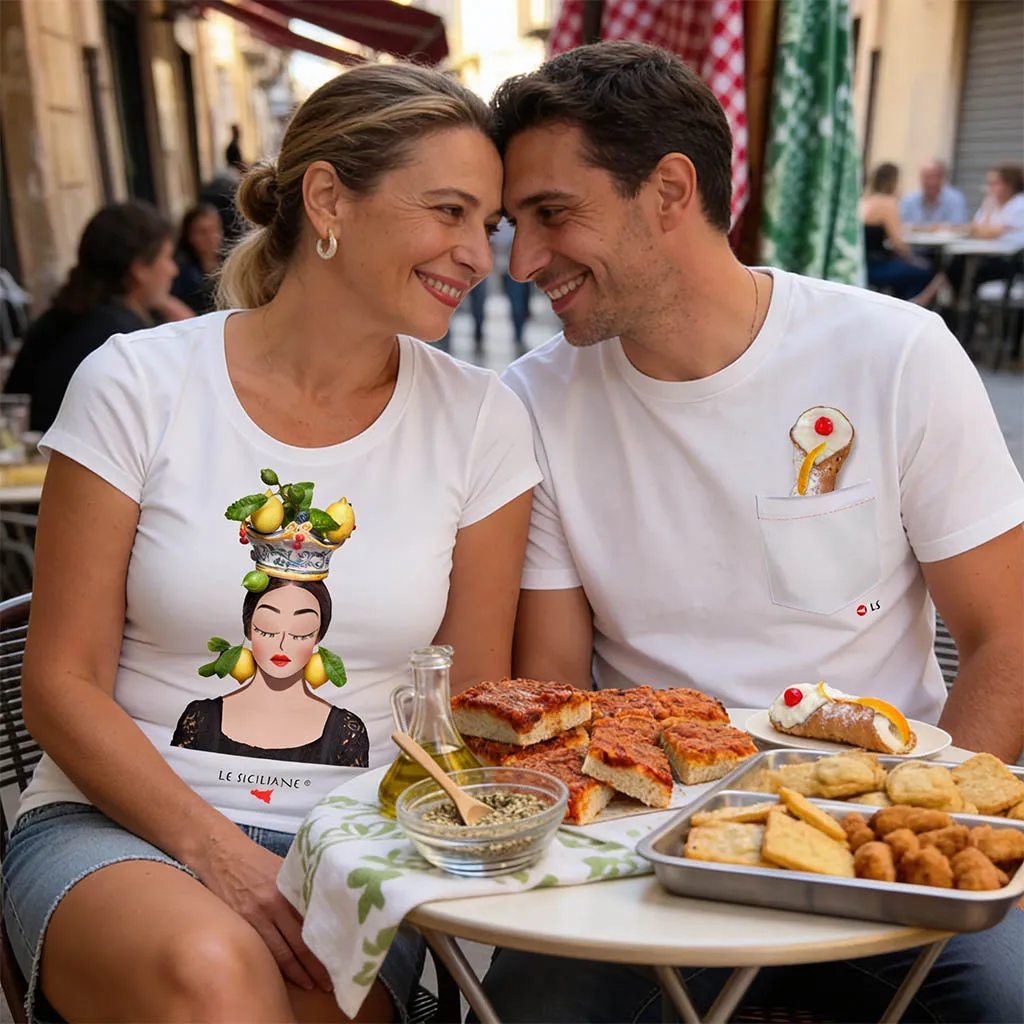
You don’t really understand Palermo from museums or guidebooks. You understand it by walking. Through warm streets, open-air markets that appear suddenly, and smells that change from one corner to the next.
Street food here is not a trend. It’s a daily habit, a way of living the city without rules or schedules.
People eat standing up, with their hands, often while talking, bargaining, watching. Everything follows a rhythm — old, spontaneous, and still alive.
This is a journey into the Palermo you eat as you walk.
Arancine: Palermo’s most iconic street food

Arancine, with meat and butter filling.
In Palermo, it’s not “arancino”. It’s arancina, and even this detail says a lot about the city’s identity.
The two most traditional versions are:
butter (with ham and béchamel) and meat (with ragù).
Two different personalities: one softer and creamy, the other richer and more intense.
Arancine are eaten hot, often on the go. They don’t wait. You grab one, take a bite, and keep walking.
Along Via Maqueda, Palermo’s main pedestrian street, you’ll also find more creative variations.
Ke Palle is one of the places where tradition meets experimentation, with fillings ranging from squid ink to parmigiana.
Panelle, crocchè and fried street sandwiches
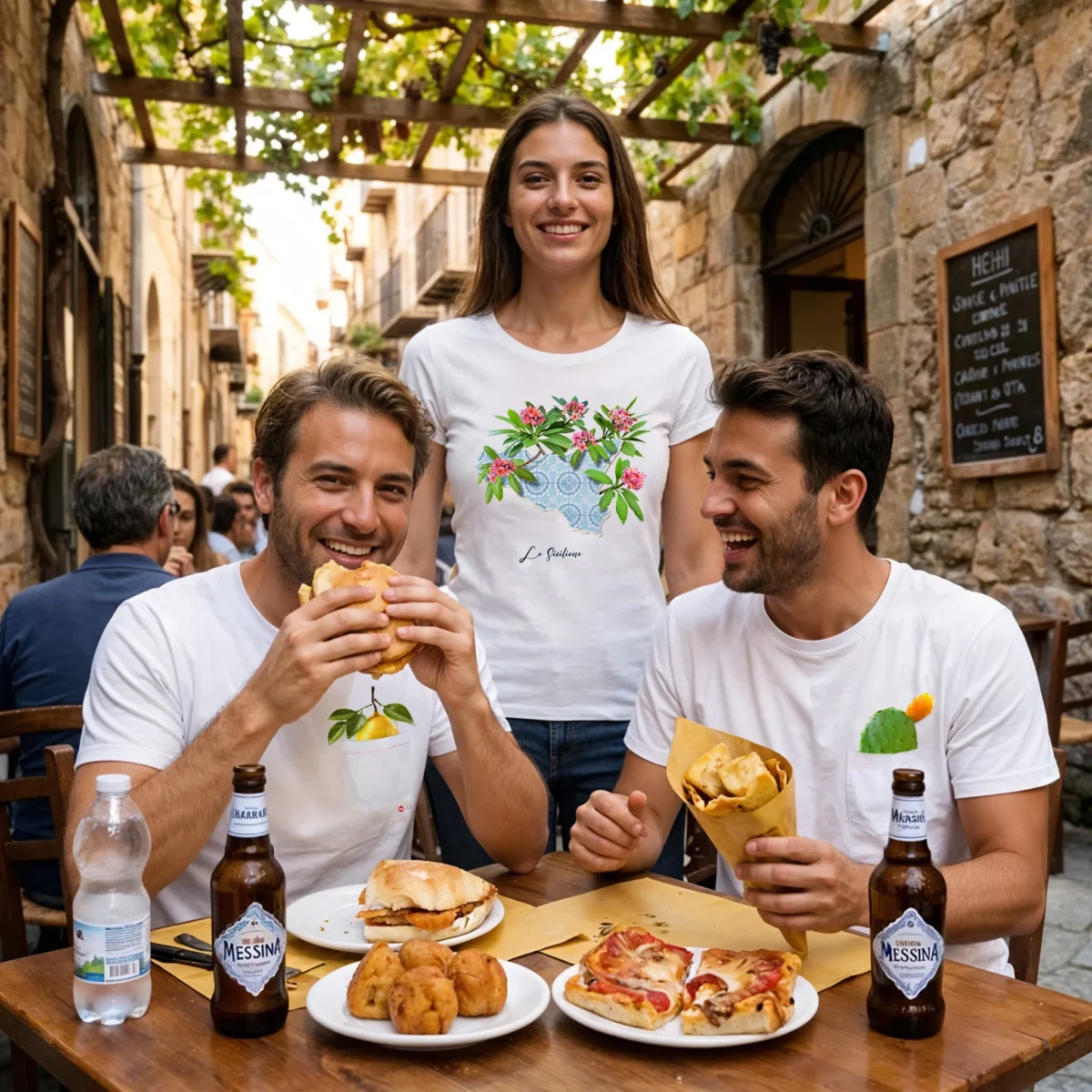
One of the simplest and most authentic street foods is the panelle sandwich.
Panelle are chickpea fritters — soft inside, crispy outside — served inside fresh bread.
Alongside them, you’ll find crocchè (potato croquettes), also known locally as “cazzilli”.
Another popular variation is the sandwich filled with fried eggplant, simple but full of flavor.
This is everyday street food: no presentation, no decoration — just taste.
Some well-known spots include:
Nni Francu u Vastiddaru, near Piazza Marina
Friggitoria Chiluzzo, in the Kalsa district
Friggitoria da Arianna, at Capo Market
Pane ca meusa: the most authentic Palermo street food
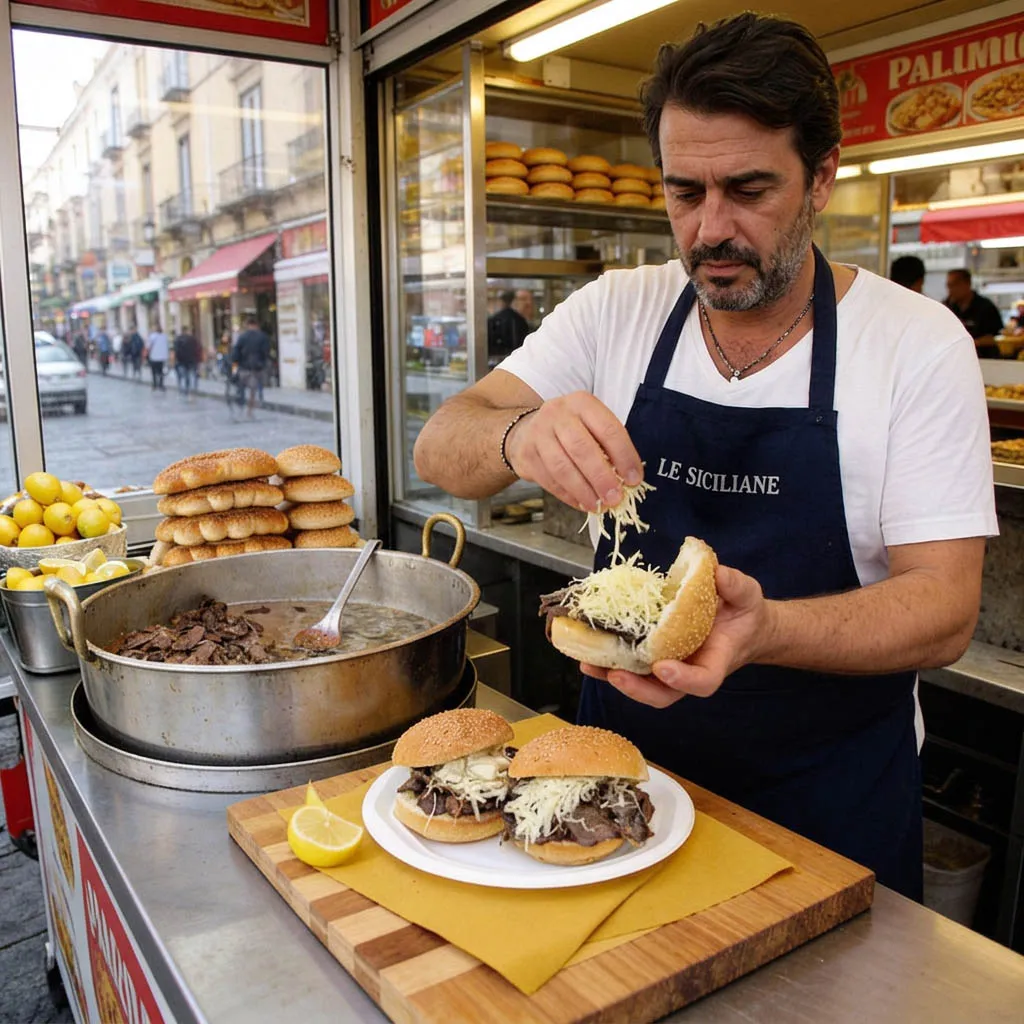
Pane ca meusa
Pane ca meusa is one of Palermo’s most iconic street foods.
It’s not for everyone. The flavor is strong, intense, and very traditional.
It’s made with veal spleen and lung, cooked in lard and served inside sesame bread.
You can order it “plain” or “married”, with ricotta or cheese.
Historic places to try it include:
Antica Focacceria San Francesco, open since 1834
Nino u Ballerino, famous for his theatrical preparation style
Giuseppe Basile, in Vucciria market
Stigghiole and grilled street food
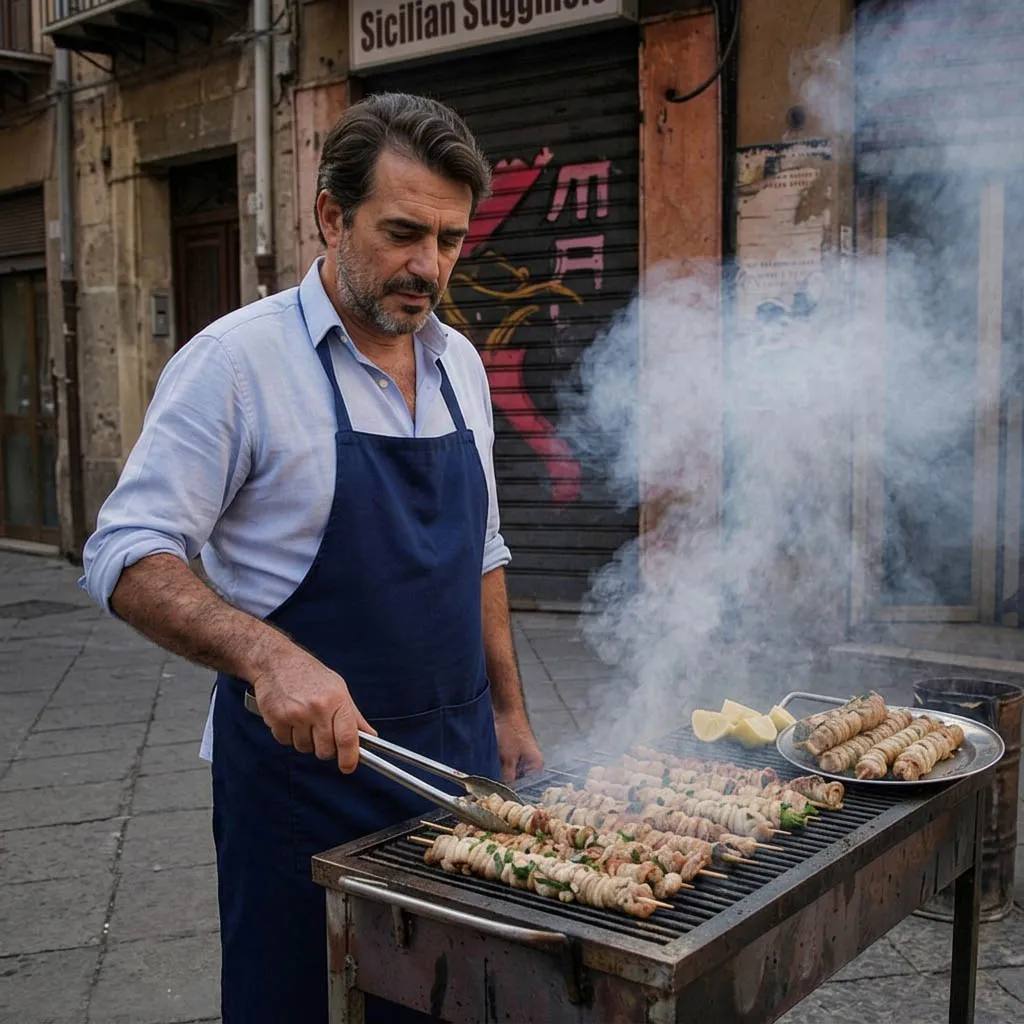
Stigghiolaro grilling stigghiole
If you see white smoke filling the street in Palermo, don’t worry — it’s just a grill.
Stigghiole are lamb or goat intestines, cooked over charcoal. Strong flavor, deeply rooted in tradition.
Next to them, you’ll often find “mangia e bevi”: grilled bacon wrapped around spring onion.
The best places to experience this are in Vucciria, especially in the evening.
Seafood street food: octopus, sea urchins and mussels
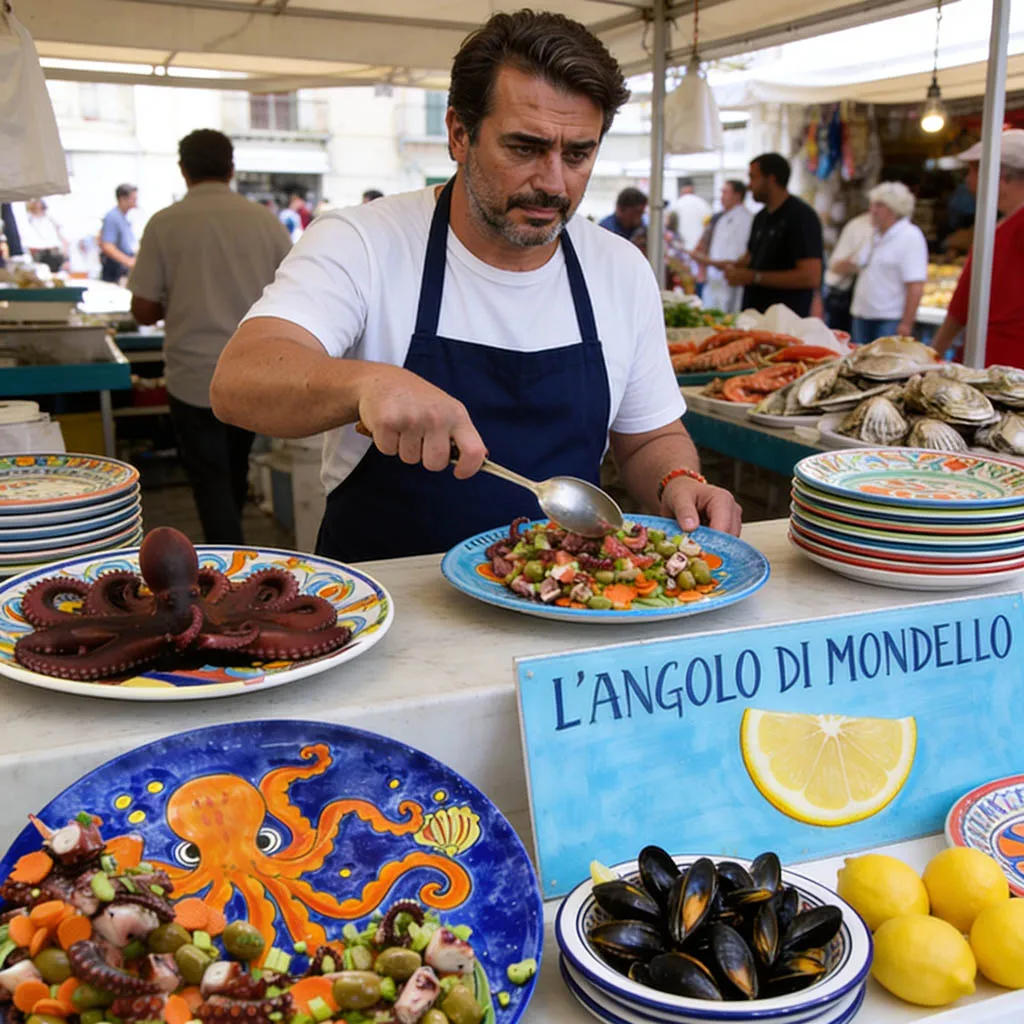
The octopus vendor
Palermo street food is also about the sea.
Boiled octopus and octopus salad are common, especially in Mondello.
Along the coast, especially in Mondello and Sferracavallo, you’ll also find:
Sea urchins, opened fresh on the spot and eaten raw or served with pasta.
Mussels, freshly opened and eaten with lemon or in a light soup.
Everything is simple, direct, and incredibly fresh.
Fried fish is also popular, served in paper cones as “coppo di pesce”.
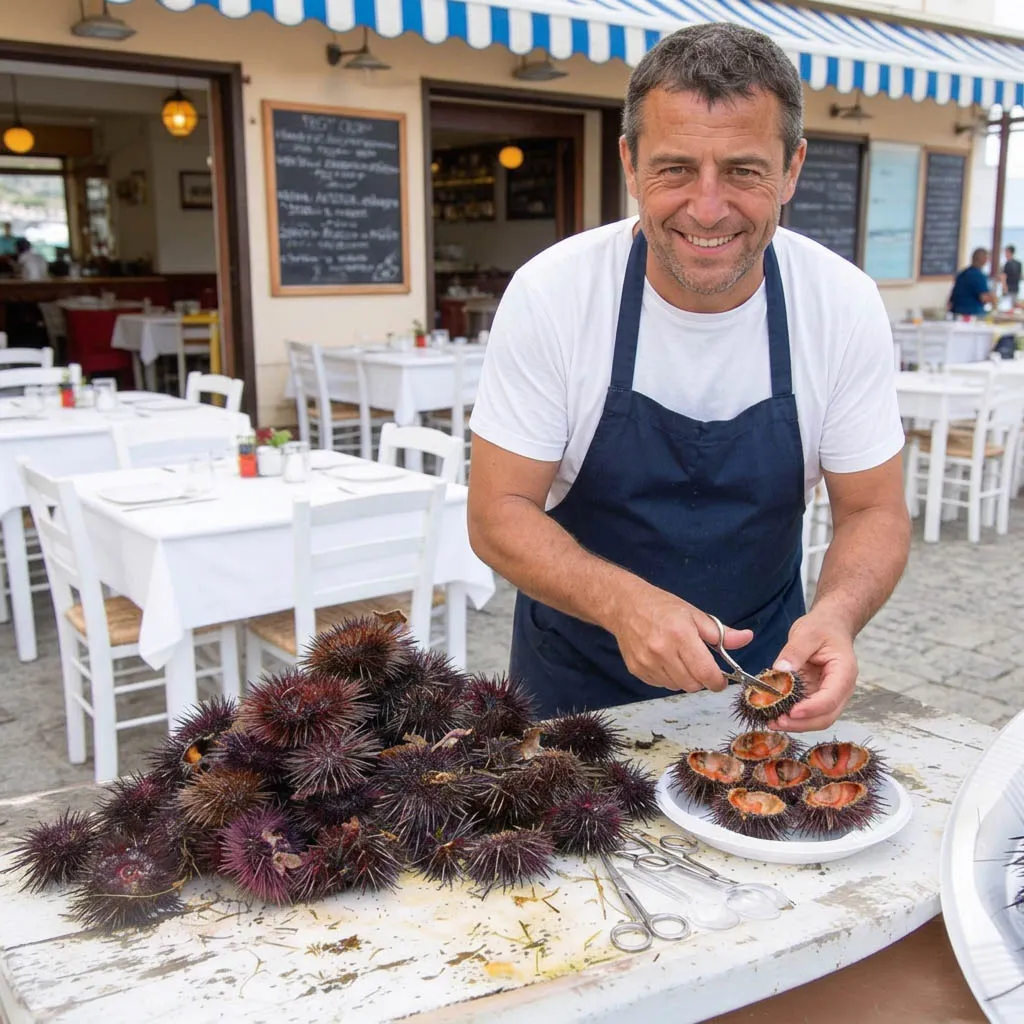
Fresh sea urchins
Sfincione and baked street food
Sfincione is Palermo’s traditional thick pizza, topped with tomato, onion, anchovies and breadcrumbs.
It’s soft, rich, and very different from classic pizza.
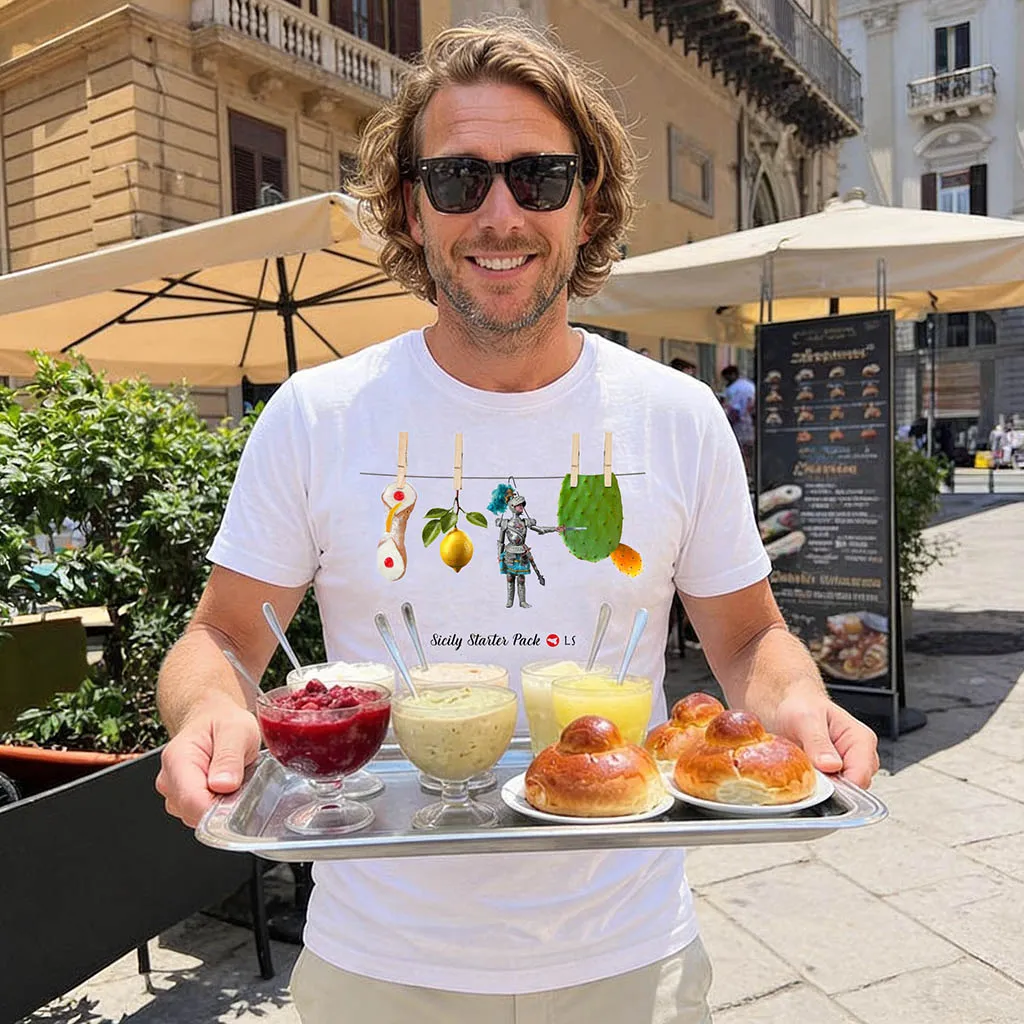
Granita and brioche
When the heat rises, Palermo slows down.
That’s when people stop for a granita with brioche.
Lemon, almond, coffee — simple flavors, perfect for a break.
Conclusion: a city you eat while you live it
Street food in Palermo is not something separate from the city.
It is the city.
You move through it, one bite at a time.