What to see in Palermo? A guided tour of the monuments.
Today’s tour takes place in Palermo: what to see?
It is precisely walking around Palermo that I realize more and more how much cultural variety exists here in Sicily.
Watch the video and come with us:))
Traveling with my Sicilian women through the capital of this treasure chest, I come across alleys, avenues and ‘straduzze’ where monuments and folklore mix extensively.
The historic center of Palermo has been elected among the largest in Europe, but I am not fond of these records. The most, the least, the average… No, I only believe in the sensations that the territory gives us.
Here I and my Sicilians come across medieval cloisters, gold and fiery red domes, houses and churches that look like sand castles, due to the tuff color of our local quarries: ruins and wonders. Palermo, in my opinion and my Sicilians, is an informal city, imperfect but extraordinarily “home” for everyone. When I welcome tourists even from those very tidy European capitals, I always think “who knows what they are thinking of our crumbling sidewalks, the loud voices of the markets, the streets not exactly polished…”. And the response is always better than I expect. They are enthusiastic, they adapt in a few hours, they admire more slowly, they smile at the merchants, they even become fond of the guide!
It is then that I understand that I have done my job well:))
My favorite route is the Arab-Norman itinerary, awarded in July 2015 by UNESCO which elected 7 monuments in Palermo (Royal Palace, Cathedral, Zisa Castle, S. Maria dell’Ammiraglio, S. Cataldo, San Giovanni degli Eremiti and the Admiral’s Bridge), the Cathedral of Monreale and that of Cefalù.

Palermo Cathedral
Dominating the heart of Palermo with its imposing presence, the Primatial Metropolitan Cathedral of the Holy Virgin Mary of the Assumption is a monument that embodies centuries of history, art and faith. Its architectural evolution reflects the different dominations that have marked the island, creating a fascinating mix of styles.
The origins of the cathedral date back to the 12th century, when Archbishop Gualtiero Offamilio wanted to erect a grandiose Christian temple on the site of an ancient mosque, which in turn was built on the remains of an early Christian basilica. This overlapping of places of worship bears witness to the complex cultural history of Palermo.
The exterior of the cathedral is striking for its majesty, with easily recognizable Norman elements such as the lateral towers and intertwined arches. Over the centuries, the building has undergone several modifications and additions, incorporating Gothic, Renaissance and Baroque elements, such as the Catalan Gothic-style lateral portico and the eighteenth-century dome.
The interior, a Latin cross with three naves, houses precious works of art and historical testimonies. Among these, the royal and imperial tombs stand out, which house the remains of key figures in Sicilian history, such as Roger II and Frederick II. The chapel of Santa Rosalia, patron saint of Palermo, is a shining example of Sicilian Baroque. The Cathedral of Palermo is not only an important place of worship, but also a symbol of the city’s identity. Its thousand-year history, artistic wealth and central location make it an essential stop for anyone visiting the Sicilian capital. Since 2015, it has been part of the UNESCO site “Arab-Norman Palermo and the Cathedrals of Cefalù and Monreale”, in recognition of its exceptional universal value. Visiting the cathedral means embarking on a journey through the history and art of a land full of charm.
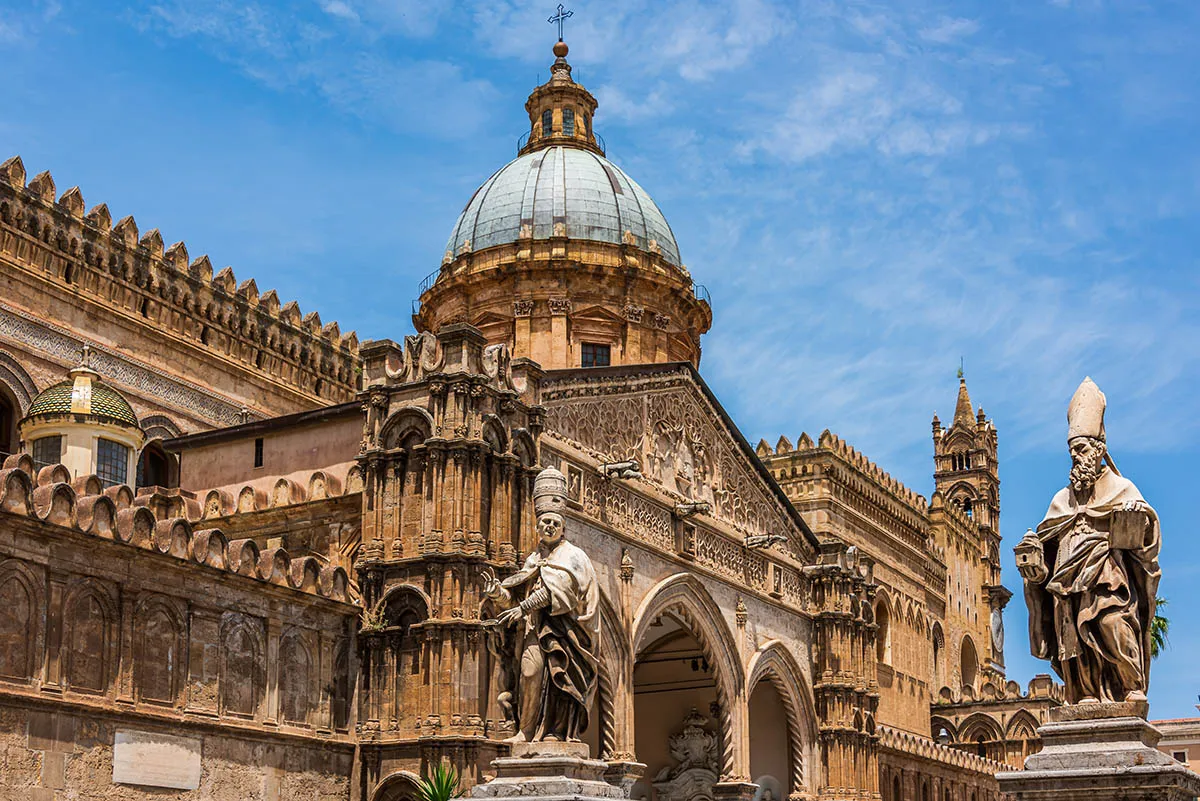
Palermo Cathedral
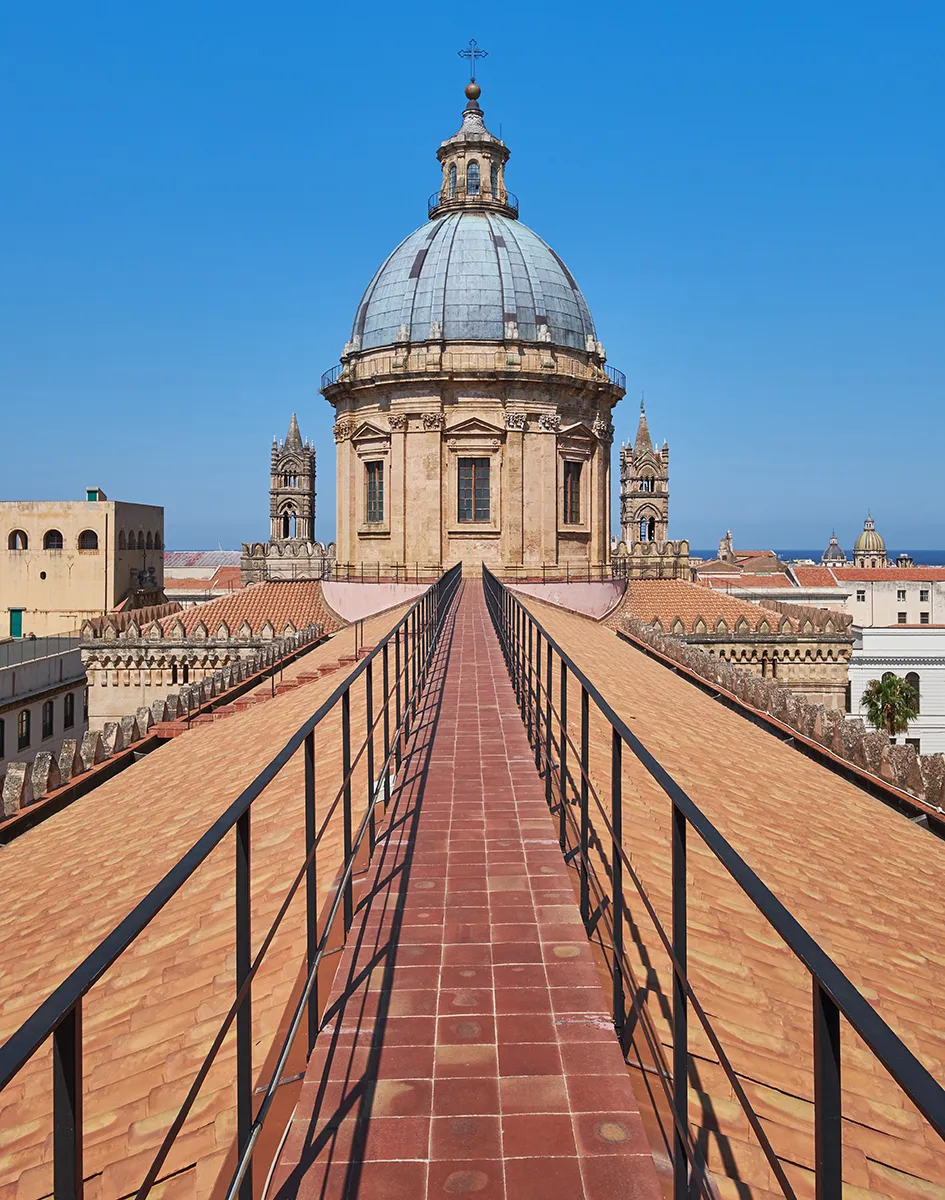
Roof of the Cathedral of Palermo
San Giovanni degli Eremiti
A few steps from the Norman Palace, stands the evocative church of San Giovanni degli Eremiti. This monument, with its unmistakable red domes, is one of the most fascinating examples of Arab-Norman architecture that characterizes Sicily.
Built around 1130 during the reign of Roger II, the church stands on the site of a pre-existing mosque, which in turn was built on the remains of a Benedictine monastery founded by Saint Gregory the Great. This overlapping of cultures is clearly reflected in the architecture of the building, where typical Norman elements blend harmoniously with Arab influences, such as the agile hemispherical domes of a bright red color.
Inside, the church has a Latin cross plan with three apses. The simplicity and purity of the lines create an atmosphere of great spirituality. Attached to the church is an enchanting cloister, probably dating back to the 13th century. This tranquil space, with its slender twin columns supporting elegant pointed arches and its lush garden, invites contemplation and rest.
San Giovanni degli Eremiti is not only an important historical and artistic site, but also a symbol of the rich and complex history of Palermo, a crossroads of civilizations. Its unique beauty continues to fascinate visitors from all over the world, testifying to the extraordinary ability of the island to blend different cultures into an original and unforgettable artistic expression.
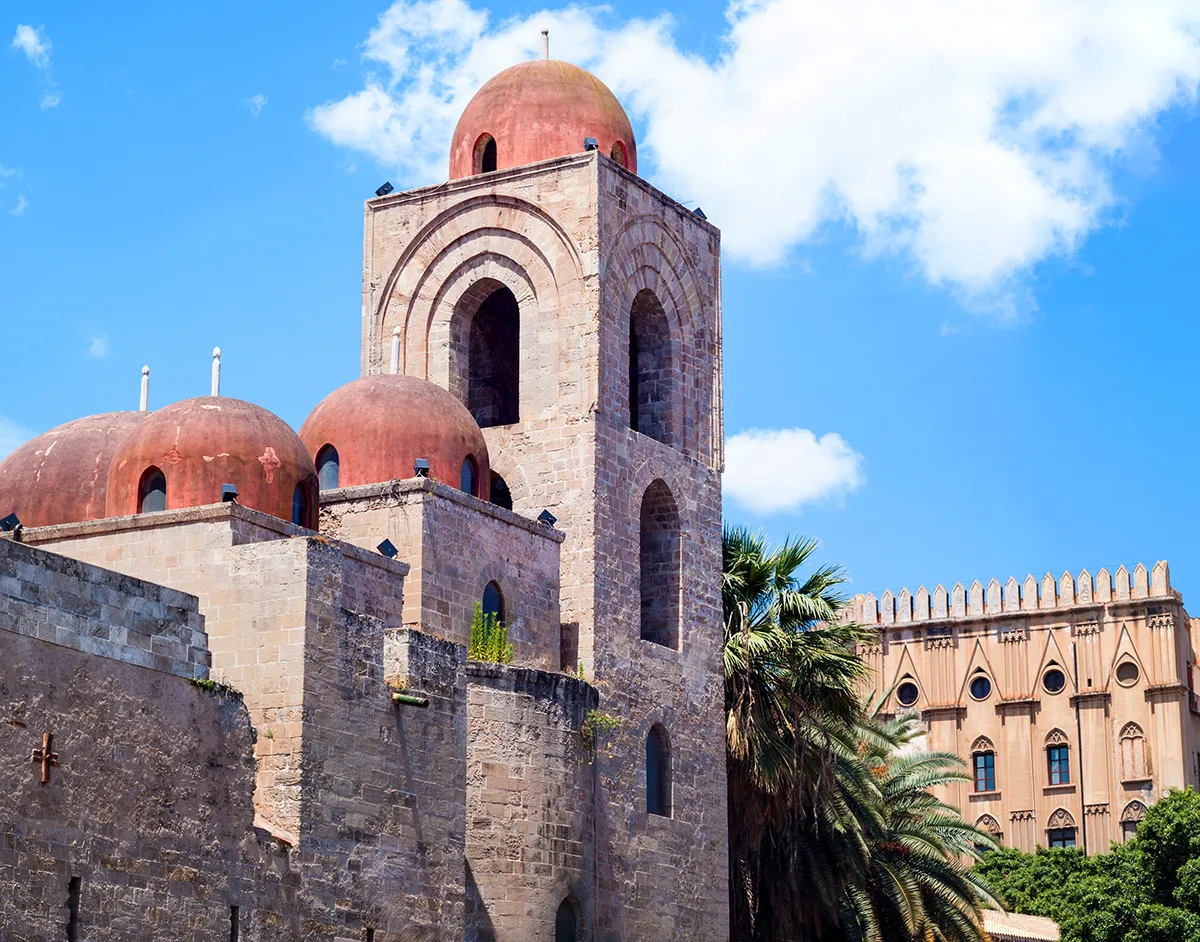
Domes of St. John of the Hermits
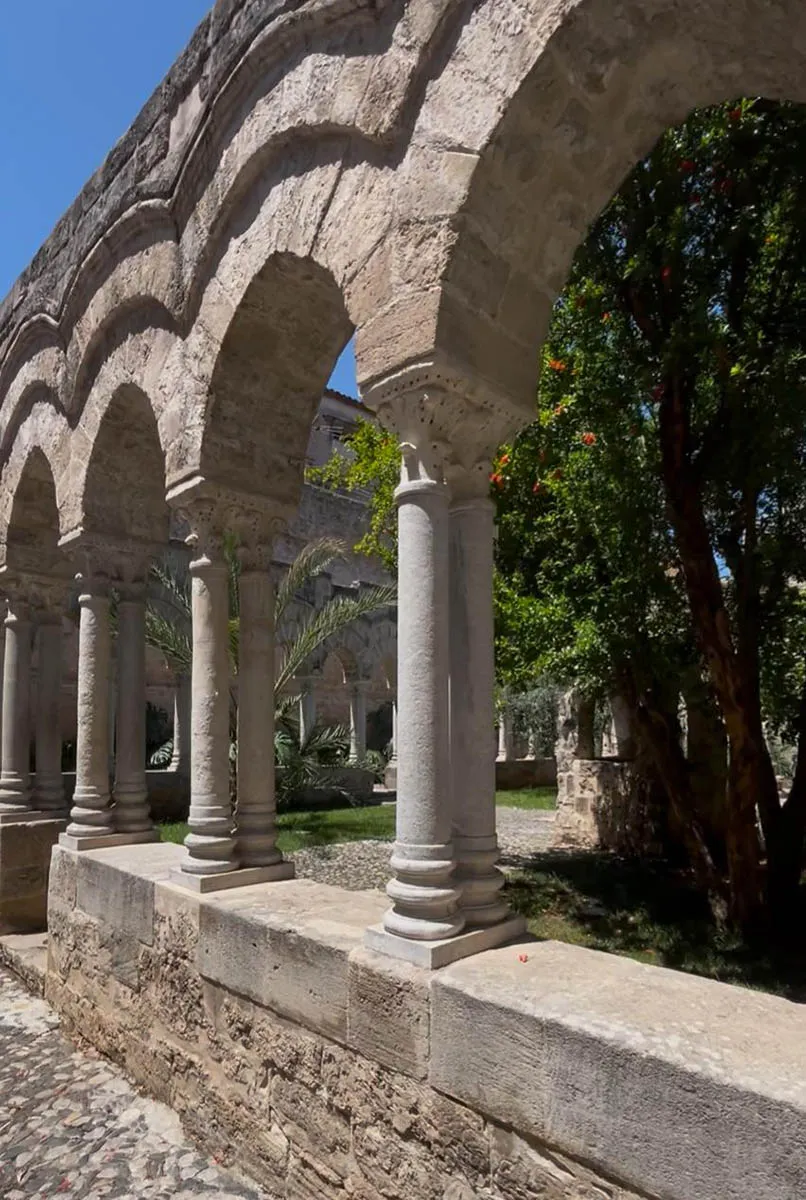
Cloister of San Giovanni degli Eremiti
The Martorana: Synthesis of Cultures in Palermo
The Church of Santa Maria dell’Ammiraglio, better known as La Martorana, is a 12th-century Arab-Norman jewel. Founded by Admiral George of Antioch, it blends Byzantine (spectacular mosaics), Arab (red domes, arches) and Norman elements. Its interior decorations narrate biblical scenes with Byzantine mastery. Despite Baroque additions, it retains its uniqueness, testifying to Sicily’s rich multicultural history. Today it is also a church for the Italian-Albanian community.
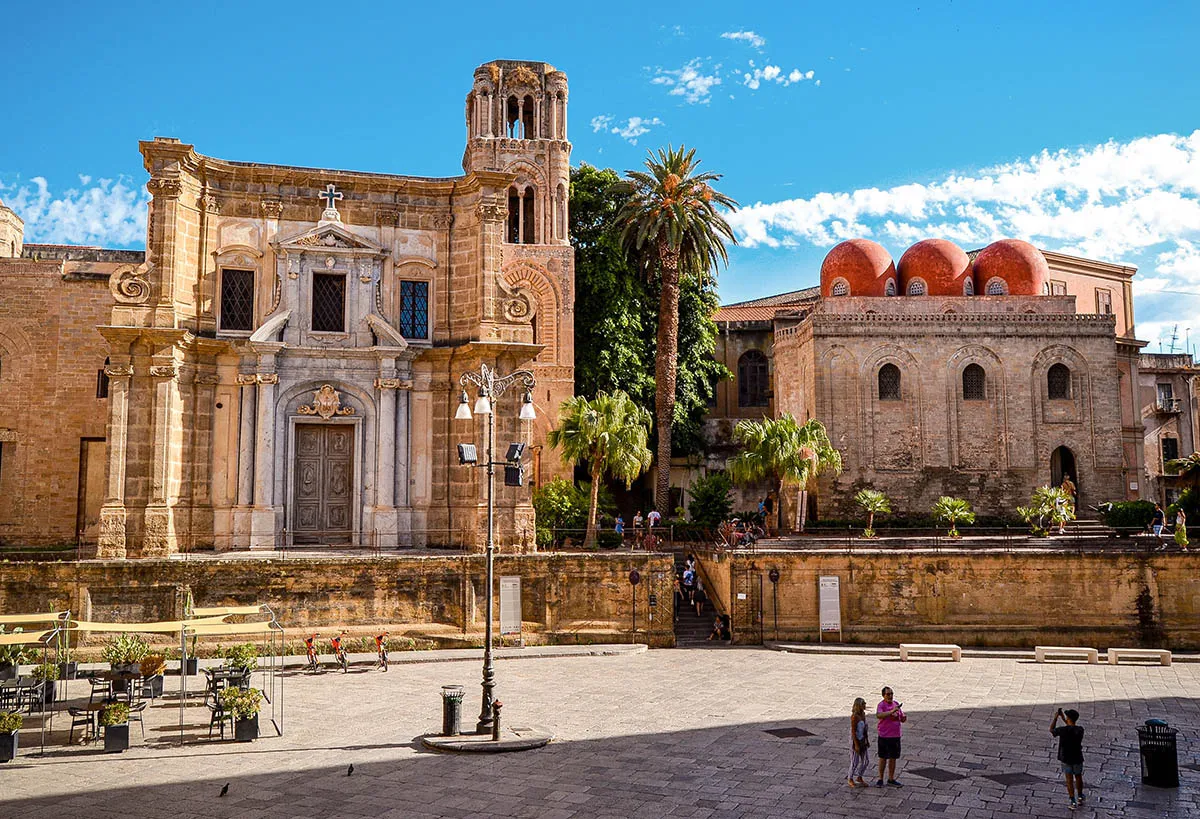
La Martorana, Piazza Bellini
Palatine Chapel
The Palatine Chapel in Palermo is one of Sicily’s most fascinating treasures and a true jewel of medieval art. Located inside the Norman Palace, this chapel is famous for its extraordinary fusion of styles: Norman, Byzantine and Islamic, which reflect the rich multicultural history of Palermo.
Built in the 12th century, the Palatine Chapel is famous for its splendid golden mosaics that decorate the walls and ceiling, depicting biblical scenes and sacred figures. Its architecture combines elements of great elegance, with a wooden coffered ceiling and richly detailed iconography. Inside, you can also admire the royal throne, decorated with mosaics and precious inlays.
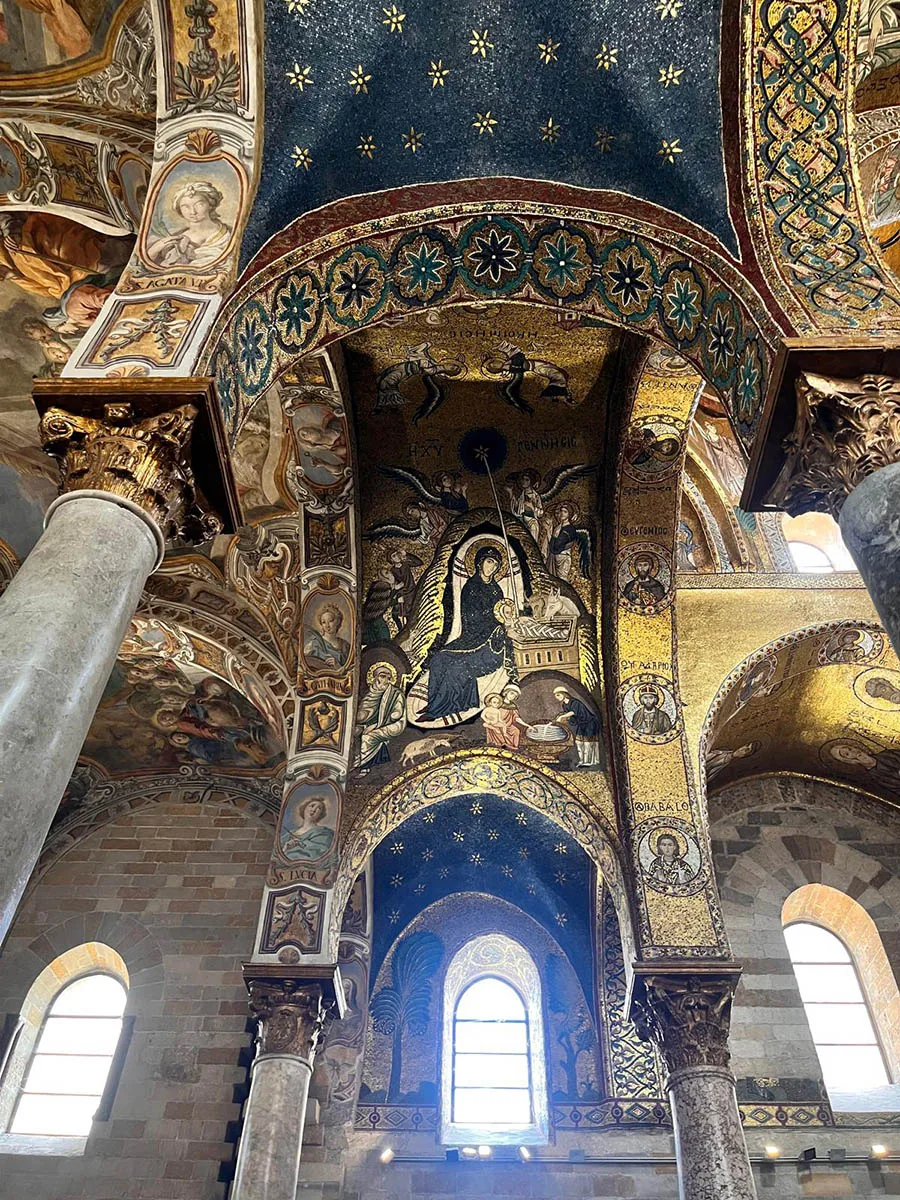
Palatina Chapel
Oratory of Santa Cita: A Baroque Jewel in the Heart of Palermo
Hidden among the streets of the historic center of Palermo, the Oratory of Santa Cita is a gem of Sicilian Baroque, famous for the extraordinary stucco decoration created by Giacomo Serpotta. This sacred space, once home to the Company of Santa Zita, enchants visitors with its opulence and the liveliness of its sculptures.
Built between the late 17th and early 18th centuries, the oratory represents one of Serpotta’s masterpieces, who here lavished his skill in shaping stucco into dynamic figures, complex allegories and sumptuous decorations. The walls of the oratory come to life thanks to these white sculptures that narrate biblical stories, episodes from the life of Santa Cita and allegorical representations of the Virtues.
The attention to detail is astonishing: playful cherubs, festoons of flowers and fruit, fake architecture blend into a harmonious and theatrical whole. The light filtering through the windows enhances the volumes and creates suggestive plays of light and shade, accentuating the plasticity of the figures.
In addition to Serpotta’s sculptures, the oratory houses valuable paintings, among which the altarpiece depicting Santa Cita stands out. The environment, as a whole, offers a complete immersion in Baroque aesthetics, where wonder and theatricality are central elements.
The Oratory of Santa Cita is not only an important artistic testimony, but also a place that evokes the fervent religiosity and cultural richness of eighteenth-century Palermo. A visit to this enchanting space is an unforgettable experience, an opportunity to admire the mastery of one of the greatest stucco sculptors of the Baroque period.
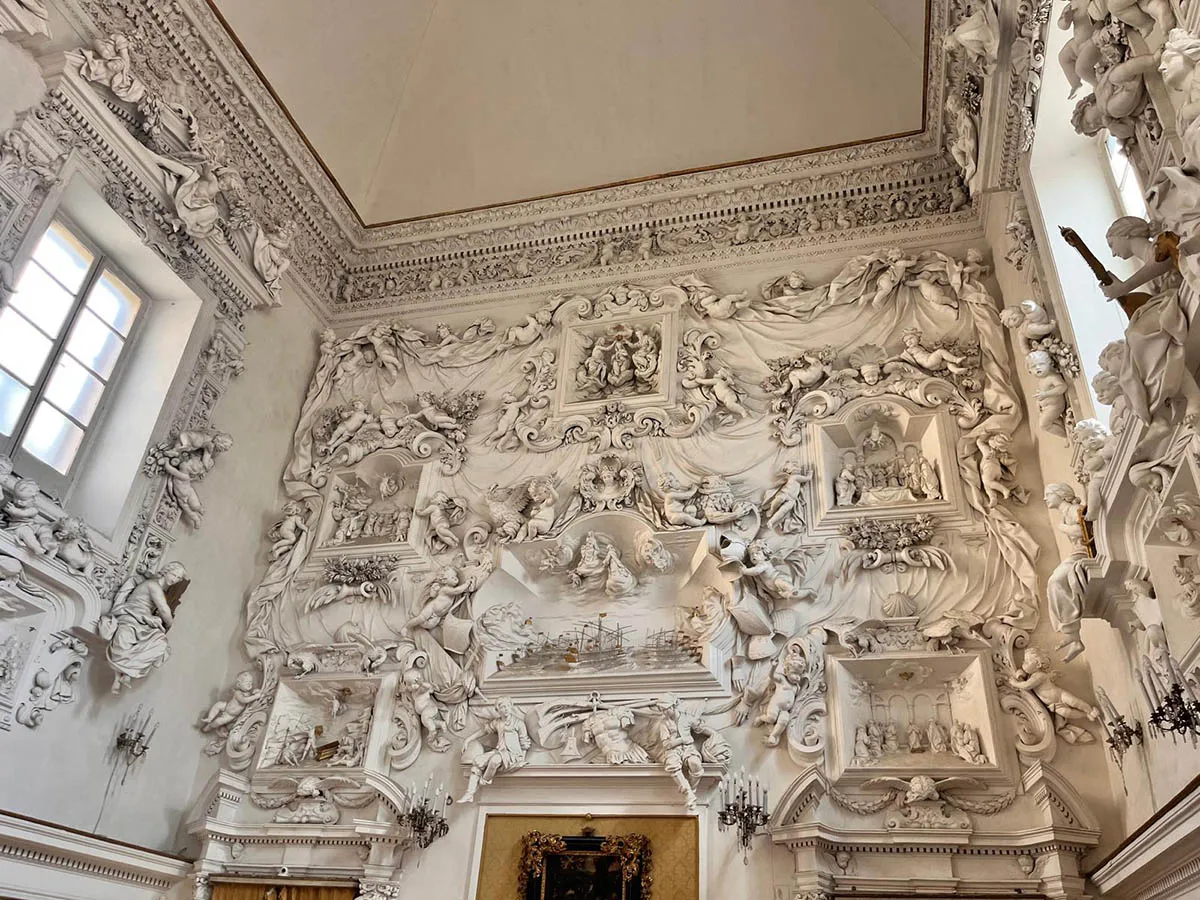
Stuccoes Giacomo Serpotta, Oratory of Santa Cita in Palermo
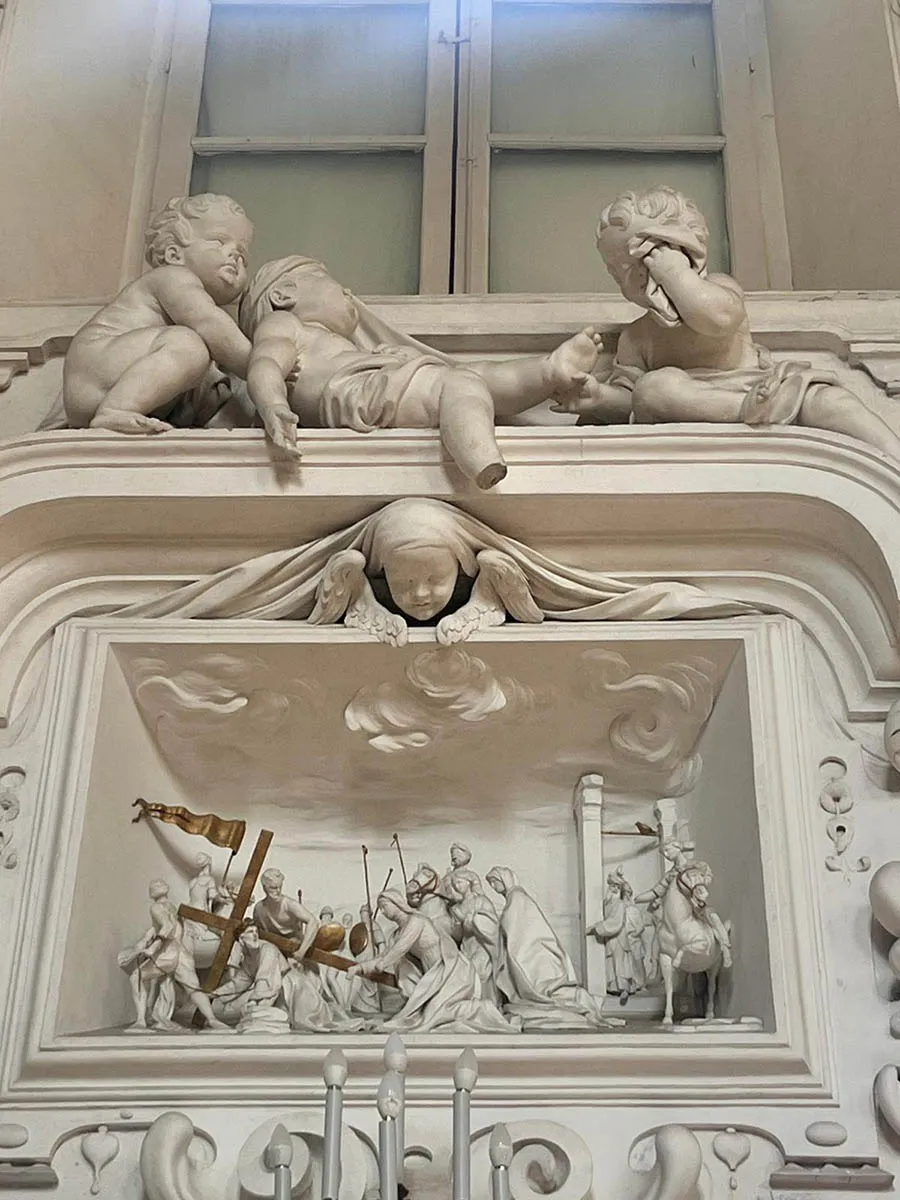
Oratory of Santa Cita, Stuccoes by Serpotta