
Blog
Sicilian Cassata: history, meaning, and where to taste it in Palermo

Sicilian Cassata: history, meaning, and where to eat it.
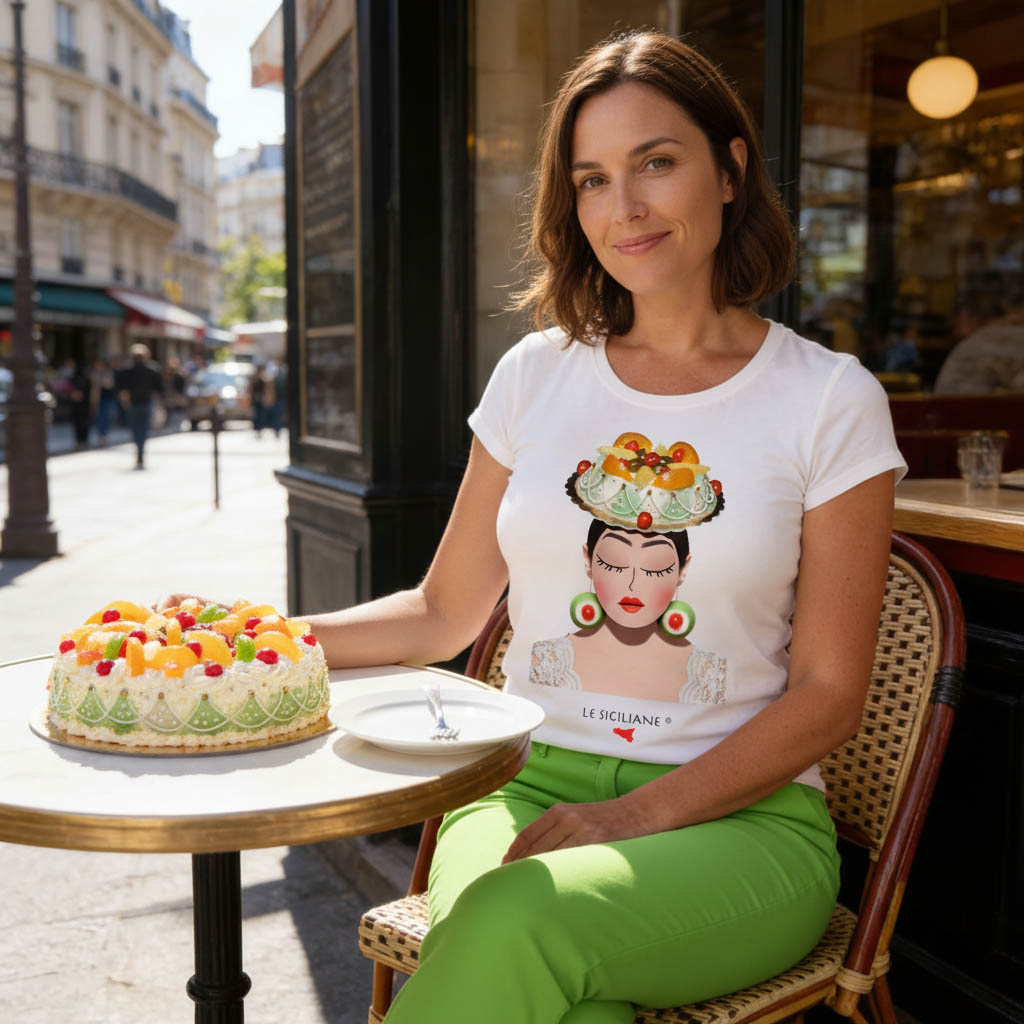
A traditional dessert that tells the story of Sicily.
Some desserts are meant to be eaten, and others are first admired before tasting. The Sicilian cassata belongs to the latter: a harmony of colors, shapes, and textures that for centuries has expressed the identity of the island.
It is not just a dessert. It is a visual and gastronomic synthesis of Sicily, where diverse influences coexist, layered over time to become an icon recognizable even beyond the island.
It is no surprise that its image — so distinctive — has also become a graphic symbol. On some t-shirts featuring the Sicilian cassata, for example, the dessert is transformed into a design, preserving its colors and visual identity.
The etymology of Sicilian cassata: origin of the name
What is the origin of the name cassata? The answer is not univocal, and for this very reason it reflects the history of Sicily: a land where languages and cultures have layered over time.
The most widely accepted theory traces the term back to the Arabic “qas’at”, meaning a large round bowl. This would refer to the container originally used to shape the dessert. During the Arab rule (9th–11th century), key ingredients such as sugar cane, lemon and citron were introduced to Sicily, profoundly shaping the island’s pastry tradition.
Another hypothesis looks instead to the Latin “caseus” (cheese), from which caseatus derives, meaning “made with cheese”. In this case, the name would directly describe the heart of the recipe: sheep’s milk ricotta, a central ingredient already used in Sicily long before the Arab period.
A third interpretation, more connected to form than language, links cassata to the word “cassa” (case or container), referring to the structure that encloses the filling, both in the baked version with shortcrust pastry and in the more elaborate one made with sponge cake.
Rather than contradicting each other, these theories coexist and complement one another. Cassata is, above all, a synthesis of cultures.
One of the earliest written references dates back to the 14th century, in the Declarus by Angelo Senisio, where it is described as “cibi genus ex caseo compositum”, that is, a food made of cheese—a sign of how central ricotta already was.
The elaborate cassata we know today — decorated with icing, candied fruit and baroque colours — is a later evolution, developed in convents and pastry shops, especially in Palermo, and closely tied to the Easter tradition. Originally, the name most likely referred to a much simpler dessert, similar to today’s baked cassata.
Sicilian Cassata – Photograph by Raffaele Rinaldi
A shape refined over time
To reach the Sicilian cassata we know today, centuries had to pass. A decisive step occurred in the 19th century, when Palermitan pastry chef Salvatore Gulì contributed to defining its modern appearance.
He codified the use of pound cake instead of shortcrust pastry and made the decoration more structured, introducing a balance of elegance and richness that still characterizes the traditional cassata.
Ingredients and symbols: beyond ricotta
The Sicilian cassata is made in layers, each with meaning.
Pound cake, sheep’s ricotta sweetened with sugar, green marzipan, white icing, and candied fruit. Each element plays a precise role, not only in taste but also in aesthetics.
Green recalls gardens, white the light of convent kitchens, candied fruit adds vibrancy. It is no coincidence that the cassata is one of the most photographed desserts: it is meant to be seen.
In Sicily, cassata is especially associated with Easter, appearing on tables at that time of year, becoming the ultimate festive dessert.

Its colors have become an inspiration beyond pastry. They appear, for example, in hand fans or silk scarves by Le Siciliane, where the Sicilian cassata is reinterpreted graphically while retaining a direct connection to tradition.
Where to try traditional sicilian cassata in Palermo
In Palermo, Sicilian cassata is easy to find, but not all versions are the same.
The historic pastry shops in the city center offer artisanal versions that truly make a difference, especially in the quality of the ricotta and the delicacy of the icing. Some of the most recommended places are:
- Pasticceria Costa – Via Maqueda, 174, a classic address in the heart of the historic center.
- Pasticceria Cappello – Via Colonna Rotta, 68, renowned for its traditional Sicilian pastries.
- Pasticceria Oscar 1965 – Via Mariano Migliaccio, 39, a key reference point for Sicilian sweets.
- Salvo Albicocco Pasticcerie – Via Principe di Villafranca, 67, a historic workshop where you can enjoy the classic pastries of Palermo.
These pastry shops are among the best places in Palermo to taste authentic Sicilian cassata, prepared according to tradition with high-quality ingredients and artisanal craftsmanship.
Can you take cassata home?
Not always. Traditional cassata is delicate, dependent on fresh ingredients, and hard to transport, especially in warmer months.
Many travelers look for alternatives: items that preserve the same visual language and colors but in a more durable form.
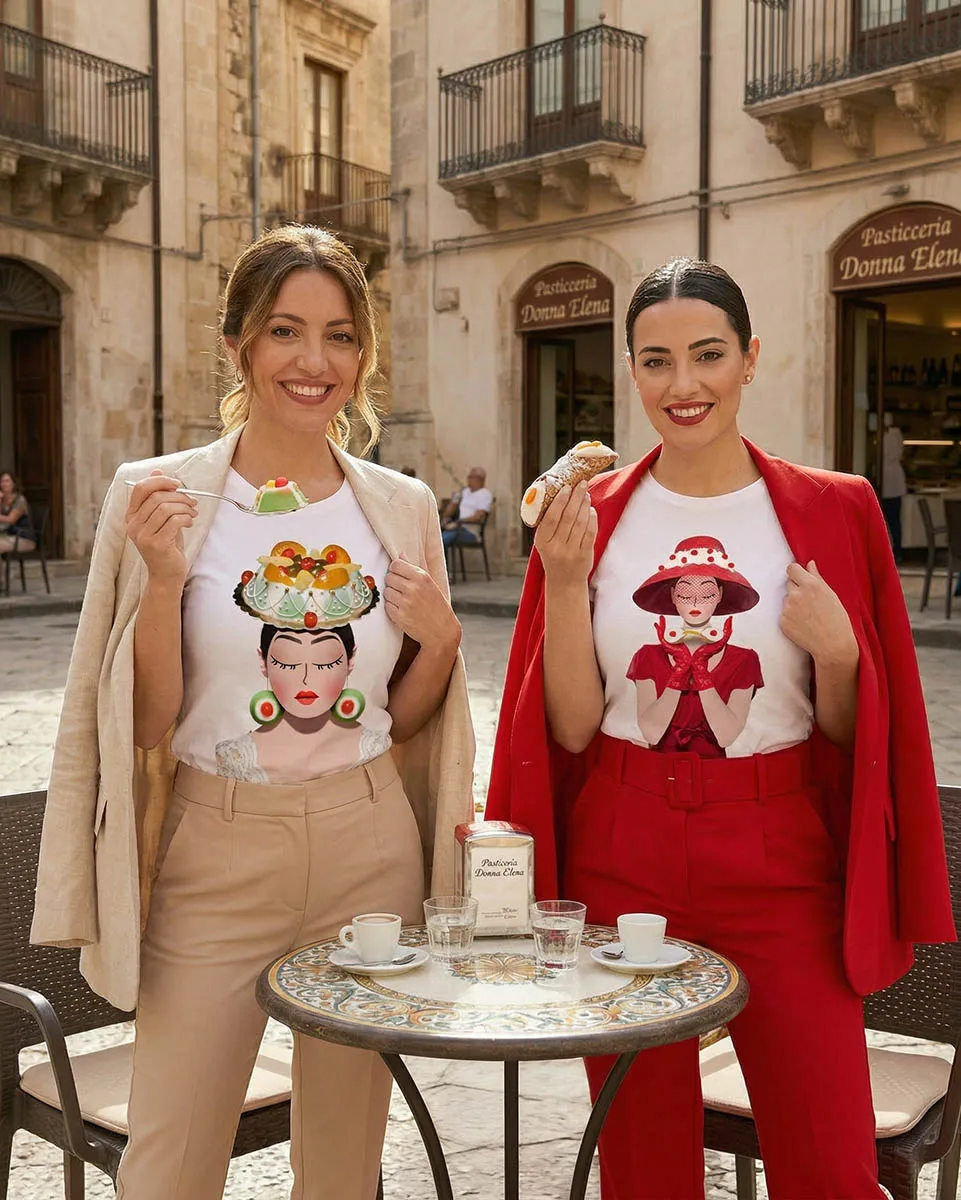
Cassata as an image
The colors of the Sicilian cassata — deep green, bright white, and vivid candied details — have immediate visual impact.
In contemporary collections by Le Siciliane, these elements are translated into wearable items: women’s t-shirts, beach towels, and light accessories meant to accompany travel or preserve memories.
It is a different way to take a piece of Sicily with you: not tied to taste, but to visual memory and its lasting impression.


